Virtual Production: Inside the LED Stage Revolution
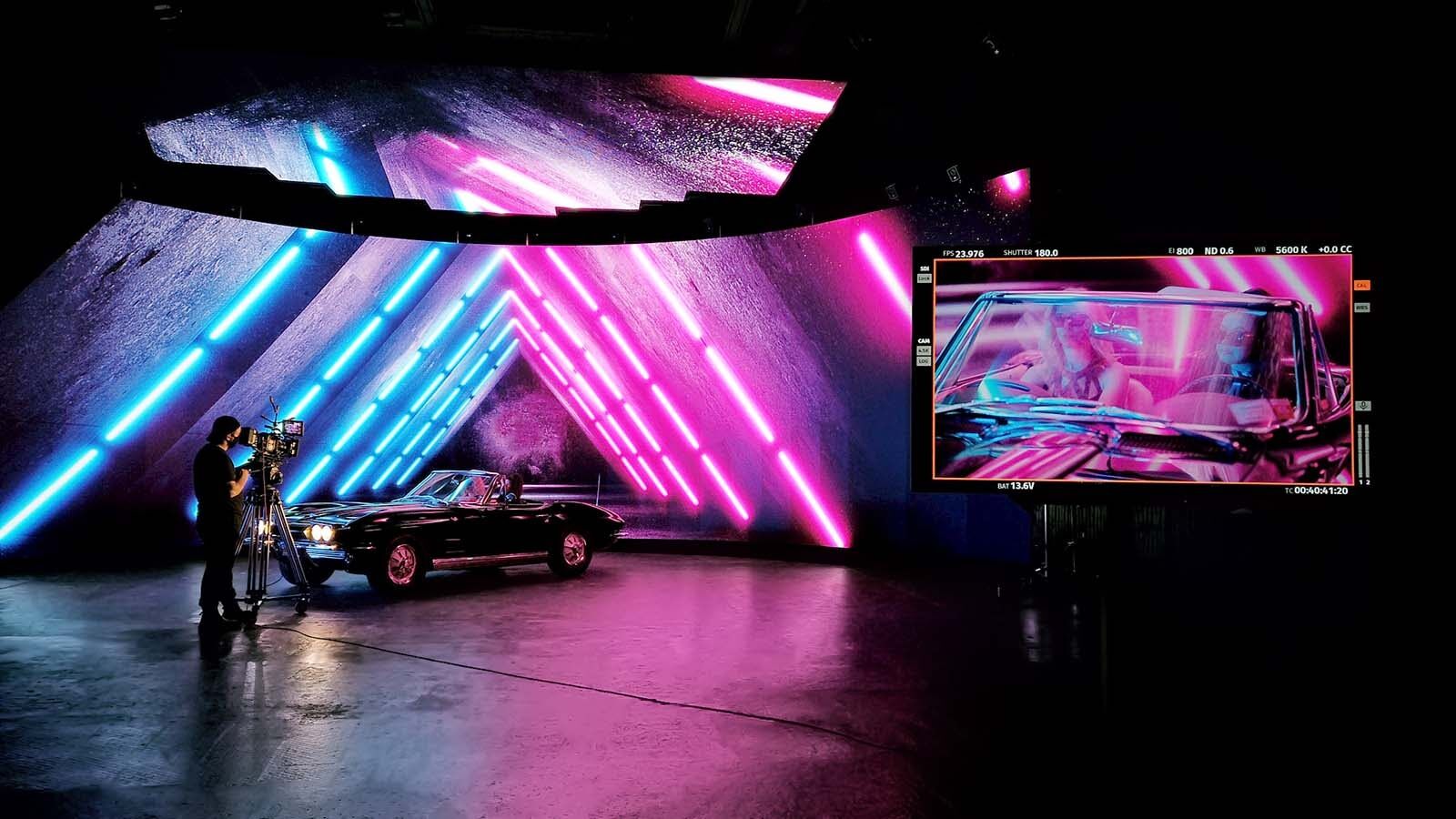
Imagine a filmmaking future where cinematographers stop worrying about weather delays, production designers abandon location scouting nightmares, and actors perform surrounded by photorealistic environments without stepping foot on location. That future arrived quietly in recent years through virtual production technology, a revolutionary filmmaking approach combining LED walls, real-time rendering engines, and camera tracking to transform how films get made. The Mandalorian didn't just utilize LED volumes for convenience; it fundamentally proved that virtual production could deliver theatrical-quality cinematography indistinguishable from traditional location shooting. By 2025, virtual production evolved from experimental novelty into industry standard infrastructure with LED volume rentals reaching $9,000-$25,000 daily for high-end virtual production facilities, with permanent installations costing $200,000-$900,000 depending on scale and technical specifications.
This LED stage revolution represents perhaps filmmaking's most significant operational transformation since digital cinematography displaced film stock, fundamentally reshaping production economics, creative workflows, and what stories filmmakers can realistically tell within budget and timeline constraints.
The Technology Foundation: How Virtual Production Actually Works
Virtual production combines multiple interconnected technologies working harmoniously to create seamless on-set visual experiences. According to Chaos documentation examining virtual production technology, the system architecture involves LED volume walls displaying real-time computer graphics, sophisticated camera tracking identifying exact camera position and movement, rendering engines converting 3D computer models into photorealistic images instantaneously, and control systems integrating all components into cohesive workflow.
The LED volume represents the visual stage backbone. According to EagerLED documentation, modern LED volumes feature ultra-fine pixel pitching (P0.9-P2.6 millimeters) enabling cinematic-quality display resolution without visible pixelation even in extreme close-ups. These massive displays, sometimes exceeding 200 square meters and reaching 8K resolution, surround actors in curved or flat configurations creating completely immersive environments.
Camera tracking technology continuously monitors camera position, movement, and orientation, updating displayed environments in real-time to maintain proper perspective parallax. According to Reissopto documentation, this parallax correction proves essential: as cameras move, the virtual environment shifts perspective exactly as physics dictates, preventing the flat appearance characteristic of traditional green screen photography where backgrounds remain static regardless of camera movement.
Real-time rendering engines, particularly Unreal Engine and Unity derivatives, transform 3D computer models into instantly viewable graphics. According to Motion Marvels documentation, Unreal Engine enabled The Mandalorian productions viewing and adjusting every environmental detail instantaneously, with lighting, textures, and animation adjustments reviewable and refined in real-time rather than requiring lengthy rendering processes. This immediate feedback dramatically accelerates creative iteration.
The complete system integrates through sophisticated control software enabling operators managing rendering quality, lighting adjustments, camera tracking calibration, and environmental modifications from control rooms. According to Garage Farm analysis, pre-visualization and storyboarding using identical tools before production enables directors blocking scenes, designing sets, and determining lighting within virtual spaces before stepping on actual sets, greatly improving creative planning while reducing on-set decision paralysis.
The Mandalorian Effect: When Virtual Production Proved Its Worth
The Mandalorian's revolutionary use of LED volume stages demonstrated virtual production's viability for mainstream television production, transitioning technology from experimental proof-of-concept to industry-standard infrastructure. According to Motion Marvels documentation, The Mandalorian utilized Unreal Engine enabling the production team adjusting the look and feel of virtual environments instantaneously. Lighting could shift to match scene mood, composition could change on the fly, and creative decisions could manifest in minutes rather than days.
This production approach eliminated traditional location shooting logistics entirely. Rather than transporting crews to distant locations, building physical sets, managing weather delays, and dealing with location-specific challenges, The Mandalorian shot entire seasons on controlled LED stages in Los Angeles soundstages. According to documentation, this concentration enabled tremendous creative flexibility while simultaneously reducing production costs through eliminated travel, location fees, and set construction expenses.
Most significantly, The Mandalorian demonstrated that virtual production environments appeared cinematically indistinguishable from location shooting. Audiences couldn't definitively identify whether scenes originated from location or virtual stages, proving that LED volume technology achieved believable photorealism matching theatrical expectations.
The Production Timeline Revolution: Faster Shooting, Faster Delivery
Virtual production dramatically accelerates production timelines through multiple efficiency mechanisms. According to Motion Marvels documentation, traditional CGI workflows involve lengthy iteration cycles where each change requires complete re-rendering potentially consuming hours or days. Virtual production eliminates these delays through immediate visual feedback: directors see changes instantaneously, enabling rapid creative decisions without waiting for technical processes completing in background.
Additionally, virtual production reduces post-production burdens substantially. According to Garage Farm documentation, many visual effects occur in-camera during virtual production shooting, minimizing traditional compositing, rotoscoping, and background replacement work typically consuming weeks or months of post-production effort. The result: faster delivery, fewer costly revisions, and more collaborative creative environments during production.
According to Boiling Point Media documentation, LED volume stages reduce traditional post-production work significantly while maintaining creative flexibility. Scenes rendered in real-time on LED walls frequently appear production-ready requiring minimal additional effects work, compared to traditional green screen shooting requiring extensive post-production compositing before shots become usable.
Cost Economics: The Investment Calculation
Virtual production cost structure differs fundamentally from traditional filmmaking, requiring substantial upfront infrastructure investment while generating long-term operational savings. According to ViboLED analysis, entry-level virtual production LED walls suitable for small productions cost approximately $50,000-$75,000, mid-scale installations range from $80,000-$300,000, and full-scale Hollywood-grade stages reach $400,000-$900,000 or beyond depending on size and technical specifications.
However, rental costs prove more accessible than ownership for production-by-production work. According to EagerLED documentation, rental ranges dramatically: small event-type LED walls rent for $500-$1,500 daily, virtual production-ready walls cost $9,000-$25,000 daily, and comprehensive LED volume stages with full technical support reach $35,000-$50,000 weekly for standing infrastructure or $100,000-$400,000 weekly for specialized pop-up installations.
Despite significant technical costs, virtual production frequently reduces overall production budgets through eliminated location expenses. According to Quite Brilliant analysis, studios factor in savings from eliminated location travel, site permits, set construction, weather contingencies, and location-specific crew requirements. For productions requiring multiple diverse environments, virtual production frequently achieves lower total costs compared to traditional location shooting despite higher technical infrastructure investments.
The Creative Transformation: Actors and Directors Embrace Immersive Environments
Perhaps most significant impact involves creative transformations enabling superior performances and enhanced artistic direction. According to Motion Marvels documentation, actors immediately recognize benefits from actual visible environments: rather than performing against empty green screens while imagining fantasy worlds, actors see the environments they're interacting with, improving emotional authenticity and performance presence.
Directors similarly benefit from real-time creative control. According to Garage Farm documentation, directors adjust lighting, composition, and environmental elements in real-time rather than committing to specific setups and discovering problems only during post-production. This immediate feedback enables rapid creative exploration impossible with traditional filming where adjustments require setup changes, reshoots, and extensive post-production rework.
According to Chaos documentation examining virtual production benefits, cinematographers achieve unprecedented control over lighting and environmental conditions. Unlike location shooting where natural lighting conditions prove largely fixed, LED volume stages enable complete lighting control enabling cinematographers implementing precise artistic vision with consistency impossible in natural environments.
Real-Time Rendering Revolution: From Game Engines to Film Sets
Virtual production's emergence correlates directly with game engine technology maturation, specifically Unreal Engine's evolution from video game tool to cinematic production infrastructure. According to Tai Arts documentation, Unreal Engine, originating as game engine, transformed into essential tool for creating cinematic environments on film sets. This evolution opened creative possibilities filmmakers previously considered impossible.
According to Motion Marvels documentation, real-time rendering enables faster production timelines and increased creativity through immediate visual feedback. Unreal Engine's photorealistic capabilities enable environments indistinguishable from practical locations, while its real-time performance ensures interactive use enabling directors exploring compositions and lighting in real-time.
Advanced ray-tracing capabilities further enhance realism. According to American Cinematographer documentation examining Project Arena, new real-time ray-tracing capability using machine-learned algorithms and NVIDIA's Deep Learning Super Sampling enables high-resolution ray-traced virtual environments displaying at 24 fps and above while reacting dynamically without performance degradation from complex lighting or intricate 3D scenes.
Camera Tracking and Parallax: The Technical Precision Enabling Realism
Camera tracking technology distinguishes virtual production from traditional green screen, enabling proper perspective parallax making environments appear genuinely three-dimensional rather than flat backgrounds. According to Reissopto documentation, advanced camera tracking monitors camera position and movement continuously, updating displayed environments in real-time maintaining accurate perspective shifts. As cameras move, virtual environments shift perspective exactly as physics dictates.
This parallax precision proves essential for maintaining visual believability. Green screen photography, lacking parallax correction, produces distinctly flat appearance viewers instinctively recognize as artificial. Virtual production's real-time parallax correction prevents this flatness, creating genuinely immersive environments appearing three-dimensional and spatially coherent.
According to Reissopto analysis, modular and scalable LED wall design enables flexible configurations from simple flat panels to fully curved volumes enveloping actors in 270-degree or 360-degree immersive worlds. This adaptability enables different production requirements: simple flat setups for modest productions, curved configurations for character-driven dramas, and fully immersive environments for action sequences demanding complete environmental immersion.
Beyond Cinema: Virtual Production Expanding Into New Industries
While films and television shows pioneered LED virtual production adoption, emerging applications extend into broadcast, advertising, corporate presentations, and live events. According to EagerLED documentation, brand launches and corporate presentations utilize virtual production LED walls delivering high production value impacts, flexible remotely updatable backdrops eliminating complex physical setups, and professional appearance impossible with traditional event production infrastructure.
According to Reissopto documentation, concert stages increasingly adopt LED volume walls creating film-like visual effects combining post-production technology with dynamic stage performances delivering immersive storytelling experience transcending traditional concert presentations.
Live streaming and esports events discover virtual production applications enabling dynamic backgrounds, real-time environmental customization, and interactive viewer experiences previously impossible. According to documentation, these emerging applications open entirely new revenue streams and creative possibilities beyond traditional film and television.
The Hybrid Future: Integration Rather Than Replacement
Emerging workflows increasingly employ hybrid approaches combining virtual production with traditional techniques rather than pursuing pure virtual production exclusively. According to Garage Farm documentation, contemporary workflows combine elements of green screen, rear-projection, and LED walls depending on specific scene requirements, maximizing flexibility and creative control rather than committing to single approach exclusively.
Additionally, AI-assisted environment generation introduces emerging capabilities where AI tools generate or modify 3D environments based on script input or director preferences, reducing manual workload and accelerating pre-production timelines. According to documentation, these AI tools represent next-generation capability enabling even more rapid virtual production development.
Remote collaboration capabilities enable directors, VFX supervisors, and set designers collaborating via cloud-connected systems, adjusting virtual environments while shooting occurs. According to documentation, this integration saves travel costs and accelerates feedback loops enabling distributed teams collaborating seamlessly despite geographic separation.
Sustainability Considerations: The Environmental Case
Virtual production offers genuine environmental benefits compared to traditional production. According to Reissopto documentation, virtual production reduces location travel eliminating transportation emissions, eliminates physical set construction reducing material waste, and concentrates production on controlled soundstages rather than dispersing crews across multiple locations. Many studios increasingly view LED stages as sustainable long-term options reducing carbon emissions and resource consumption.
According to Boiling Point Media documentation, the concentration of production infrastructure enables efficient resource utilization impossible with dispersed traditional location shooting requiring location-specific equipment, temporary infrastructure, and logistical complexity.
The Convergence: When Technology Becomes Creative Necessity
Virtual production represents perhaps filmmaking's most significant operational transformation since digital cinematography displaced film stock. By combining LED volumes, real-time rendering, camera tracking, and game engine technology, productions achieve unprecedented creative control, operational efficiency, and artistic quality previously requiring location shooting logistics and extensive post-production effort.
Inside the Stage: Where Innovation Meets Imagination
Virtual production's LED stage revolution fundamentally reshaped filmmaking from logistical exercise dependent on location availability toward controlled creative environment enabling infinite artistic flexibility. Rather than fighting weather, managing location logistics, and compromising creative vision through practical constraints, directors now command complete environmental control realizing precise artistic intentions within controlled soundstage environments.
In 2025 and beyond, virtual production represents not experimental novelty but rather industry standard infrastructure determining how films get made, which stories become financially viable, and what creative possibilities previously considered impossible through practical constraints now become routine production procedure. Filmmakers embracing virtual production as creative foundation rather than supplementary tool will likely lead storytelling innovation, enabling previously impossible stories through technological partnership transforming creative limitations into creative opportunities.


Comments
Post a Comment