The Hidden Costs of Streaming Infrastructure: What Netflix Never Tells You
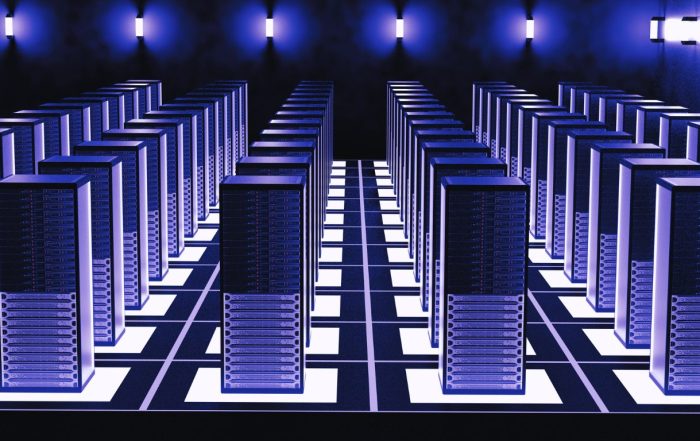
Netflix appears effortlessly seamless: you press play, content streams immediately in crisp HD or 4K, and playback continues uninterrupted across devices. This illusion of simplicity masks extraordinarily complex infrastructure, with Netflix spending billions annually ensuring that subscribers never experience buffering, loading delays, or service interruptions. Behind every movie and series lies an architectural marvel involving data centers, content delivery networks, transcoding systems, and monitoring infrastructure. Netflix's AWS costs alone run approximately $1 billion annually according to 2025 estimates, yet this represents just one component of comprehensive infrastructure spending that extends far beyond cloud computing into physical data centers, CDN services, network redundancy, and operational personnel maintaining systems invisible to casual viewers.
Understanding streaming infrastructure costs reveals why profitable streaming remains elusive despite billions in subscriber revenue, why content pricing continues escalating, and why technical reliability constitutes genuine competitive moat rather than mere engineering detail.
The Data Center Foundation: Building the Physical Backbone
Streaming begins with data centers, physical facilities housing servers, storage systems, and networking equipment enabling content storage and delivery. Data center construction represents enormous capital expenditure with ongoing operational complexity frequently underestimated in public discourse about streaming economics.
According to infrastructure cost documentation, data center construction in the United States ranges from $10-100 million depending on scale and location. In India, per-megawatt construction costs reach approximately 46.5 crore rupees (approximately $5.5 million USD), with additional cloud computing facility costs reaching 138 crore rupees (approximately $16.5 million USD) when combined with server acquisition and deployment.
These construction costs represent only initial capital expenditure. Ongoing operational expenses include power consumption (the largest operational expense), cooling systems, security infrastructure, maintenance personnel, network connectivity, and hardware replacement cycles. Data center servers typically require replacement every 3-5 years, creating ongoing capital replacement requirements.
Netflix doesn't exclusively own data centers. Instead, the platform leases infrastructure from third-party providers including AWS (Amazon Web Services), which operates global data centers providing Netflix computing resources through rental arrangements rather than ownership. This approach reduces capital intensity but creates ongoing monthly expenses scaling with content volume and subscriber growth.
Content Delivery Networks: The Invisible Arteries of Streaming
Content Delivery Networks (CDNs) represent critical infrastructure enabling efficient global content distribution. CDNs reduce bandwidth costs substantially by caching content at geographically distributed edge servers, eliminating redundant data transfers from origin servers to distant viewers.
According to research analyzing CDN effectiveness, well-configured CDNs reduce bandwidth costs up to 60 percent compared to direct origin delivery, transforming CDNs from optional enhancement into essential cost management infrastructure.
CDN costs scale with data transfer volume. According to AWS pricing, data egress (data transferred outward from origin servers) typically costs approximately $0.021 per gigabyte transferred monthly. Netflix transfers approximately 4 billion gigabytes monthly according to 2025 estimates, creating monthly egress costs alone approaching $84 million or approximately $1 billion annually.
However, CDN pricing varies substantially by provider, geography, and volume. According to CDN cost documentation, serving content to regions with limited infrastructure (Sub-Saharan Africa, parts of South Asia) costs substantially more than serving affluent markets with robust connectivity. This geographic cost disparity creates economic incentives concentrating content delivery investment in profitable markets while limiting service quality in price-sensitive regions.
Multi-CDN strategies, where platforms distribute traffic across multiple CDN providers based on cost and performance considerations, reduce dependency on individual providers while enabling cost optimization through competitive routing. However, multi-CDN implementation introduces management complexity requiring continuous monitoring and adjustment to optimize cost-performance tradeoffs.
Transcoding and Video Encoding: The Computational Machinery Behind Streaming
Streaming demands that individual films and series exist in multiple formats, bitrates, and resolutions supporting diverse devices and network conditions. A single Netflix original film might require encoding in 15 different bitrate versions (ranging from 480p mobile streams through 4K premium), plus codec variations including H.264, H.265, and AV1 formats. This encoding multiplication represents substantial computational expense consuming specialized hardware and software resources.
According to infrastructure documentation, transcoding costs arise from computational resources required converting source video into multiple delivery formats. The complexity scales with content volume: releasing 589 original titles annually (Netflix's 2024 rate) requires transcoding millions of individual bitrate-format-resolution combinations.
Modern compression techniques including AV1 and HEVC codecs provide significant savings over older H.264 standards, reducing file sizes by up to 50 percent while maintaining visual quality. However, implementing new codecs requires infrastructure investment, updated software libraries, and compatibility testing across diverse playback devices.
According to CacheFly's infrastructure analysis, transcoding represents approximately 15-20 percent of total streaming infrastructure costs for volume-intensive platforms like Netflix. For a platform with $18 billion content spending, if transcoding represents 20 percent of total costs, that implies roughly $3.6 billion dedicated exclusively to video format conversion before distribution even begins.
The Personnel Layer: Engineering and Operations Infrastructure
Behind every stream stands extraordinary engineering capability: engineers monitoring systems for failures, optimizing performance, analyzing cost-benefit tradeoffs, and implementing continuous improvements maintaining service reliability. Netflix reportedly employs thousands of engineers dedicated to infrastructure, monitoring, and optimization.
According to documentation of Netflix's engineering philosophy, the company deliberately avoids stringent cost controls on engineering teams, instead emphasizing developer productivity and innovation even if infrastructure spending increases. Netflix philosophy holds that engineer productivity matters more than minimizing infrastructure expenses, reflecting belief that engineering capability generates greater long-term value than infrastructure cost reduction.
This philosophy creates paradoxical economics: Netflix spends more on infrastructure and operations than theoretically necessary because engineering teams prioritize feature velocity and innovation over cost minimization. Custom dashboards providing cost visibility to engineering teams enable informed optimization decisions without constraining developer productivity through blanket spending limitations.
According to Netflix internal documentation, the platform uses sophisticated cost tracking systems where each engineering team receives visibility into infrastructure costs they generate. This transparency encourages cost-conscious decision-making while maintaining freedom enabling innovation and rapid experimentation.
Data Storage Costs: The Perpetual Expense of Content Libraries
Maintaining Netflix's vast content library across multiple resolutions, formats, and redundancy copies creates substantial storage expenses. According to infrastructure cost documentation, Netflix stores content in AWS S3 (object storage), AWS RDS (database systems), Hive, Druid, Elasticsearch, and Snowflake, with each storage system carrying distinct cost structures and use cases.
Netflix content library encompasses thousands of films and series, each requiring storage in multiple formats. 4K content files consume substantially more storage than HD versions. Maintaining redundancy across geographic regions (required for disaster recovery and business continuity) multiplies storage costs further, potentially doubling or tripling costs compared to single-region storage.
According to storage cost estimates, a single 4K film might require 100-200 gigabytes of storage when accounting for multiple format variations. With Netflix's library approaching 10,000 titles and additional season-by-season series expansions, total storage costs likely exceed $100-200 million annually. Storage costs scale continuously as content libraries expand, creating perpetual expense growth independent of subscriber growth.
Network Connectivity and Peering: The Invisible Infrastructure Enabling Global Reach
Streaming requires direct network connections between origin servers and internet service providers (ISPs) worldwide, enabling efficient content delivery without unnecessary routing complexity. These network peering arrangements require substantial negotiation and sometimes payment to ISPs and other network operators.
According to Netflix documentation, network connectivity and peering expenses represent significant infrastructure component, scaling with global subscriber distribution. ISPs in smaller markets might demand premium pricing for direct Netflix connections, creating geographic cost disparities requiring strategic peering investment decisions.
Netflix reportedly maintains direct relationships with hundreds of ISPs globally, enabling preferential traffic routing, reduced latency, and improved user experience. Establishing and maintaining these relationships requires ongoing negotiation, technical integration, and sometimes financial arrangements.
Monitoring, Security, and Redundancy: The Insurance Infrastructure
Streaming reliability requires extensive monitoring infrastructure detecting failures before they affect user experience, security systems preventing unauthorized access or content piracy, and redundancy systems ensuring continued operation during component failures.
These systems consume substantial infrastructure resources: sophisticated monitoring requires persistent network traffic analyzing system health, security infrastructure consumes computational resources analyzing threats, and redundancy requires duplicate infrastructure maintained for failover purposes.
According to data center documentation, redundancy infrastructure can increase overall costs 30-50 percent compared to non-redundant systems, reflecting the cost of maintaining backup systems never actively used but essential for disaster recovery.
Regional Cost Disparities: Geography as Financial Constraint
Streaming infrastructure costs vary dramatically across geographies based on local power costs, labor expenses, real estate prices, and network connectivity availability.
According to data center cost documentation, US data center construction costs reach $11.90-$25 per megawatt, substantially higher than Indian costs of $3.90-$8.40 per megawatt. This 3-6x cost differential incentivizes placing infrastructure in lower-cost regions while maintaining sufficient capacity in premium markets for latency considerations.
However, geographically distributed infrastructure increases management complexity. Netflix must maintain sufficient capacity worldwide ensuring low latency for all subscribers while optimizing total infrastructure costs across diverse regional pricing. This optimization challenge requires sophisticated capacity planning software and continuous monitoring of cost-efficiency across regions.
The Efficiency Dashboard: How Netflix Controls the Uncontrollable
Netflix pioneered sophisticated approaches to infrastructure cost management through custom dashboards providing detailed cost visibility to engineering teams. According to Netflix infrastructure documentation, the platform reports AWS billing data contextualized for individual teams, pushing cost awareness directly to decision-makers who generate expenses.
This cost transparency approach enables distributed decision-making where engineers understand infrastructure cost implications of their architectural choices without requiring centralized cost approval. Merging cost and usage context through dashboards reportedly enables Netflix infrastructure efficiency substantially exceeding competitors.
However, this philosophy creates ongoing expense as infrastructure continues scaling. Netflix essentially accepts permanent infrastructure cost growth as acceptable price for engineering productivity, innovation velocity, and user experience quality that these infrastructure investments enable.
The Platform Economics Reality: Infrastructure Enables But Constrains Profitability
Netflix's $1 billion annual AWS costs represent approximately 7 percent of total revenue according to 2024 financial analysis, manageable within Netflix's 25-30 percent operating margins.
However, this calculation excludes CDN costs, data center ownership or leasing, personnel expenses, security infrastructure, monitoring systems, and countless other infrastructure components comprising total streaming infrastructure spending likely exceeding $2-3 billion annually depending on calculation methodology.
This magnitude of infrastructure spending demonstrates why streaming platforms require billions in subscriber revenue supporting operations. The infrastructure providing seamless streaming experiences consumed tremendous resources remaining invisible to casual viewers yet representing fundamental constraint on profitability and subscriber pricing sustainability.
The Invisible Architecture: Infrastructure as Competitive Moat and Financial Burden
Streaming infrastructure costs reveal fundamental economic reality: streaming's apparent simplicity masks extraordinarily complex systems requiring billions in annual spending ensuring reliability, performance, and global availability. Netflix's infrastructure investment creates competitive moat competitors struggle replicating, yet simultaneously constrains profitability and pricing flexibility since infrastructure costs scale continuously with subscriber growth and content volume.
In 2025 and beyond, streaming platforms unable to manage infrastructure costs efficiently while maintaining service quality face unsustainable profitability trajectories. Infrastructure optimization remains crucial determinant of streaming platform viability, suggesting that future winners will be platforms most effectively balancing engineering productivity enabling innovation against cost control preventing runaway infrastructure spending that undermines profitability sustainability. The streaming services succeeding long-term will likely be those treating infrastructure not as cost center requiring minimization but rather as competitive capability enabling superior user experience, network efficiency, and global reliability that justify streaming's infrastructure expense through subscriber retention and premium positioning.


Comments
Post a Comment