The Business Model Behind Film Franchises
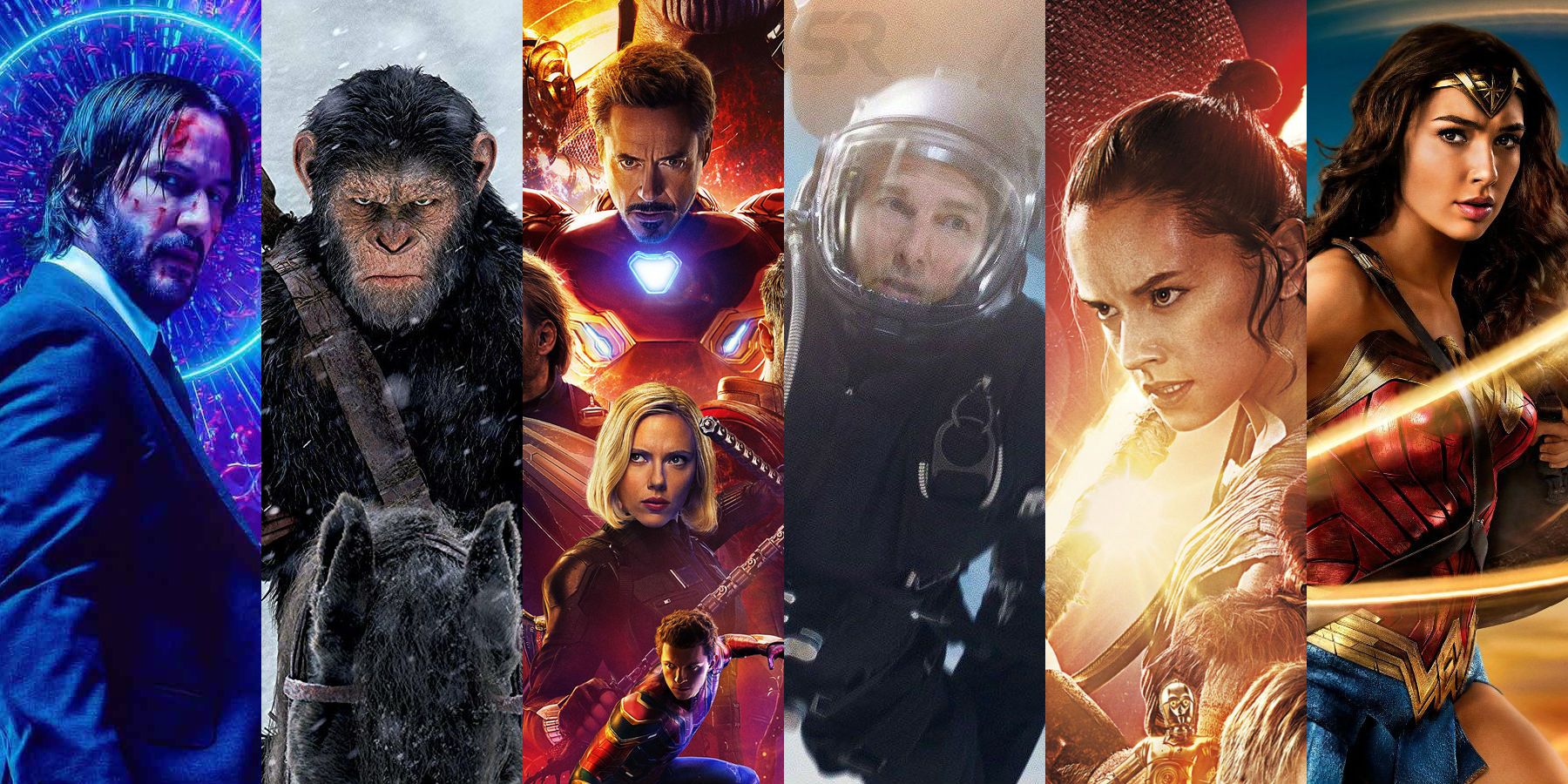
If Hollywood were a relationship, franchises would be the comfortable marriage that occasionally requires marriage counseling. Studios keep returning to proven properties like old partners, investing hundreds of millions of dollars betting audiences will care about the seventeenth installment of a beloved character's story. The logic seems questionable—audiences famously hate sequels, right? Yet the numbers tell a remarkably different story: among the top 60 box office films since 2016, only five were authentic original properties. The remaining 55 represented sequels, reboots, and franchise installments, demonstrating that sequels don't just exist; they dominate cinema's financial landscape.
Understanding film franchise economics reveals sophisticated financial architecture where single films function as entry points into multi-decade revenue streams spanning theatrical releases, streaming platforms, merchandise licensing, video games, theme park attractions, and ancillary opportunities that collectively dwarf theatrical box office revenue.
The franchise business model represents calculated financial engineering where studios deliberately structure productions to create recurring revenue opportunities, building cinematic universes where subsequent installments become progressively more profitable (until franchise fatigue inevitably emerges). This mechanism explains why Hollywood repeatedly greenlights sequels despite their reputation for mediocrity, why studios invest in expanding universes rather than developing original properties, and how franchises have fundamentally reshaped contemporary cinema.
The Genesis: When Studios Discovered Recurring Revenue
Film franchises didn't always dominate Hollywood. Before the 1990s, sequels were viewed as financially risky compromises, efforts to squeeze additional revenue from successful properties without guaranteed audience interest. Studios made occasional sequels when productions succeeded spectacularly, but the practice remained relatively uncommon.
The seismic shift toward franchise-centric strategies emerged through the career of Alan Horn, who would become instrumental in franchising's domination. According to industry documentation, beginning in 1999 while leading Warner Bros., Horn pioneered what became known as the "tent pole" strategy, deliberately scheduling 4 to 5 massive-budget blockbuster films annually designed to carry the studio's entire production slate on their commercial backs.
This strategy proved revolutionary. Horn concentrated production budgets on visually spectacular event films—action blockbusters, science fiction epics, and adventure franchises—reasoning that audiences would reliably attend familiar properties featuring established characters, recognizable stories, and proven commercial appeal. These tent pole films received the bulk of studio resources (marketing budgets, creative attention, production investment) while smaller productions benefited from leftover infrastructure.
The financial results proved compelling. Between 1999 and 2011, Warner Bros. achieved unprecedented performance, becoming the first studio to exceed one billion dollars in domestic box office revenue for 11 consecutive years, a feat directly attributable to the tent pole strategy's success.
This success prompted industry-wide imitation. By the 2010s, the tent pole strategy had become Hollywood's dominant operating model, copied by studios globally. The Marvel Cinematic Universe's establishment in 2008 further accelerated franchise investment, as Disney recognized franchises' potential to generate ancillary revenue through streaming, merchandise, video games, and theme park attractions simultaneously.
The Tent Pole Theory: Why Studios Bet Everything on Franchises
Modern studios organize production slates around tent pole franchises deliberately. Rather than distributing budgets evenly across diverse projects, studios concentrate resources on 4 to 5 annual franchise blockbusters, accepting smaller profits (or losses) from mid-budget productions, knowing tent pole franchises will subsidize entire operations.
This portfolio strategy reflects research demonstrating that top 10 films now represent approximately one-third of all theatrical tickets sold annually, up from historical patterns where box office distributed far more evenly across numerous releases.
Travis Knox, a film producer and Chapman University professor, explained this calculus to Yahoo Finance: "The financial aspect is paramount. The expenses associated with marketing feature films are substantial, and with Hollywood's target demographic moving away from traditional advertising on television, it becomes increasingly challenging to spread the word. Releasing a film that audiences are already familiar with is seen as a safer option."
This logic transforms franchise investment from risky speculation into portfolio management. Studios understand that occasionally tent poles will underperform (John Carter, Dark Phoenix), but when tent poles succeed—franchises generating 500 million to over 2 billion dollars worldwide—the returns dwarf any modest failures absorbed within the portfolio.
According to research examining 225 franchise films released between 1976 and 2014, the primary determinants of franchise box office performance include genre (action, science fiction, and comedy significantly outperform), production budget (each dollar invested returns approximately 26 cents in box office), critical acclaim (a 10% improvement in critical ratings generates approximately 11.89 million dollars in additional box office), and Oscar nominations (worth approximately 35 million dollars in incremental box office revenue).
However, the research revealed a troubling pattern: the numeric order in a franchise series shows diminishing returns, with each successive film generating approximately 9.2 million dollars less box office revenue than its predecessor, except for carefully managed children's franchises where Disney and Universal maintain positive relationships between installment order and box office performance.
This dynamic explains why action, horror, and comedy franchises often experience declining box office across sequels while franchises targeting children (Disney animated franchises, Pixar series) frequently show increasing or stable box office across multiple installments. Studios managing children's franchises employ greater strategic discipline, deliberately pacing releases, maintaining creative quality, and managing ancillary opportunities to preserve long-term value rather than extracting maximum short-term revenue.
The Marvel Model: Franchise Business Strategy Perfected
Marvel Studios' approach to franchise development represents perhaps the most sophisticated contemporary example of franchise economics at scale. The Marvel Cinematic Universe, established with 2008's Iron Man, now comprises over 30 theatrical films, numerous Disney+ streaming series, animated projects, and coordinated ancillary exploitation across video games, merchandise, and theme park attractions.
Marvel's success formula reflects deliberate strategic choices. First, Marvel prioritized filmmaking craft over established brand recognition. According to Harvard business analysis and industry documentation, Marvel hired relatively untested directors including Jon Favreau (Iron Man), James Gunn (Guardians of the Galaxy), and Anthony and Joe Russo (Captain America: The Winter Soldier), directors who lacked established reputations in blockbuster filmmaking.
This counterintuitive approach enabled Marvel Studios leadership to maintain creative consistency across franchises, preventing individual directors from imposing overwhelming artistic signatures that might deviate from Marvel's broader narrative and tonal requirements. Unknown directors brought fresh creative perspective while remaining collaborative partners with studio management rather than establishing artistic dictators demanding autonomous decision-making.
Second, Marvel leveraged unstable creative cores stabilized by technical consistency. While directors changed between films, Marvel Studios maintained consistent visual effects infrastructure, cinematography approaches, editing styles, and color grading across projects, creating coherent visual language despite directorial variations.
Third, Marvel cultivated audience curiosity through deliberate narrative architecture. Post-credit sequences, interconnected storylines, Easter eggs, and multi-installment narrative arcs kept audiences speculating about future installments. By deliberately creating narrative incompleteness—suggesting answers would arrive in subsequent films—Marvel invested audiences emotionally in remaining franchises.
The financial results proved extraordinary. As of 2020, the Marvel Cinematic Universe generated over 22 billion dollars in worldwide box office revenue, with merchandise, streaming rights, video games, and ancillary income adding billions more. A single blockbuster installment (Avengers: Infinity War) generated 2 billion dollars in box office revenue while simultaneously driving an additional 5 billion dollars in licensed merchandise retail sales.
This dynamic explains Marvel's franchise value: theatrical releases function as marketing catalysts for ancillary exploitation. Each MCU film simultaneously promotes Marvel's Netflix series, theatrical sequels, Disney+ streaming shows, video games, merchandise collections, and theme park attractions. The theatrical release becomes a franchise ecosystem event rather than a standalone financial event.
The Ancillary Revenue Multiplier: Where Franchises Really Profit
Theatrical box office represents merely one component of franchise revenue. According to industry analysis, ancillary revenues—merchandise licensing, video games, theme park attractions, and streaming rights—frequently equal or exceed theatrical box office returns.
Ancillary revenue streams include toy licensing (Mattel reports that Toy Story merchandise retail sales exceeded 10 billion dollars lifetime), apparel licensing, video game licensing, theme park attractions, home video sales, streaming licensing, music licensing, and cross-promotional opportunities with corporate sponsors. For franchises like Marvel, Disney's Star Wars, and Universal's Fast and Furious, ancillary revenues systematically surpass theatrical profitability.
This ancillary revenue emphasis explains why studios invest heavily in franchise development despite theatrical saturation. A single franchise can simultaneously generate revenue across dozens of revenue categories, multiplying overall profitability substantially beyond theatrical box office alone.
For example, Avengers: Endgame's 2.8 billion dollar theatrical global box office represents only partial revenue. Disney simultaneously earned streaming revenue licensing MCU films to international markets, merchandise licensing revenue from action figures and apparel, video game revenue from multiple Marvel gaming titles, theme park revenue from expanded attractions, and television licensing revenue from MCU Disney+ series.
This portfolio approach - maximizing revenue across theatrical, streaming, merchandise, games, and theme parks simultaneously - represents how contemporary franchises fundamentally operate. Studios don't measure franchise success primarily through theatrical box office; rather, they evaluate total franchise ecosystem revenue encompassing all exploitation categories simultaneously.
Franchise Fatigue: When Audience Goodwill Evaporates
Despite franchises' undeniable financial success, a troubling phenomenon threatens franchise sustainability: franchise fatigue, the audience disengagement occurring when studios saturate audiences with too many installments or when creative quality declines noticeably.
According to recent research from Hub Entertainment Research, only 29% of U.S. consumers report keeping up with "most or all" entries in given franchises, while 41% watch some installments and 30% rarely or never follow franchises. Most strikingly, only 24% of respondents expressed eagerness about upcoming Marvel releases, once-infallible franchises that dominated global box office.
Franchise fatigue symptoms include declining critical reception, audience burnout from frequent releases, narrative confusion from overly complicated multi-installment storytelling, perception that studios prioritize financial extraction over quality, and audience fatigue with perceived repetition and formulaic storytelling.
Research examining box office reveals patterns. Science fiction and action franchises show consistent diminishing returns across sequels, each installment generating progressively less box office revenue despite equivalent production and marketing investment. Some franchises (Star Wars sequel trilogy, Jurassic World: Dominion, Dark Phoenix) experienced particularly sharp audience rejection as critical reception declined and narrative fatigue accumulated.
The underlying cause appears straightforward: franchises succeed when audiences voluntarily choose to engage repeatedly, driven by genuine emotional investment in characters and storylines. However, when studios aggressively monetize franchises through excessive releases, narrative exhaustion, or creatively bankrupt installments, audiences withdraw participation. The psychological contract between audiences and studios breaks.
Research examining franchise burnout suggests audiences remain receptive to franchises offering genuine creative innovation, exploring underutilized characters, experimenting with unconventional narrative approaches, or maintaining rigorous creative standards. Franchises declining when studios prioritize quantity over quality, when releases feel transparent financial extractions, or when narrative complexity overwhelms accessibility.
This creates strategic tension for studios. Franchises generate extraordinary profits through aggressive exploitation across multiple revenue streams, yet excessive exploitation triggers audience backlash that can rapidly destroy franchise value. The sweet spot requires balancing profit maximization against franchise sustainability.
The Strategic Architecture: Deliberate Planning Across Decades
Successful franchises operate through meticulously planned strategic architectures spanning decades, coordinating theatrical releases, streaming strategies, merchandise cycles, and ancillary opportunities simultaneously.
Disney exemplifies this planning. According to Parrot Analytics analysis, Disney+ experiences approximately 50% demand originating from franchises, with nearly 28% originating from original franchises created specifically for expansion across theatrical, streaming, merchandise, and theme park channels simultaneously. Marvel, Star Wars, Pixar, and other Disney franchises receive coordinated strategic investment across theatrical releases, streaming shows, merchandise launches, and theme park expansions executed within integrated timelines.
This coordination contrasts with earlier approaches where theatrical releases occurred independently of ancillary planning. Contemporary studios deliberately plan multi-platform strategies before production commences, scheduling theatrical releases to optimize merchandise retail cycles, planning streaming releases to complement theatrical windows, coordinating theme park attraction launches with theatrical blockbusters, and sequencing releases across entertainment platforms strategically.
Netflix has emerged as a contemporary competitor attempting franchise coordination across streaming platforms. Stranger Things exemplifies Netflix's franchise approach: the theatrical narrative concluded while simultaneous announcements included Broadway stage productions, spinoff series, merchandise partnerships, and coordinated social media campaigns creating extended engagement beyond traditional theatrical exhibition.
However, Netflix's franchise development remains less sophisticated than Disney's established machinery. Disney operates integrated business divisions (Studios, Streaming, Consumer Products, Parks and Experiences) coordinating across divisions strategically. Netflix's relatively recent entry into franchise management means its coordination mechanisms remain underdeveloped compared to Disney's decades-refined playbook.
The Economic Formula: Why Studios Can't Resist Franchises
Film franchise business models generate extraordinary returns despite requiring massive capital investment, creating irresistible financial incentives for studio executives.
A successful franchise operating across multiple platforms can generate revenue at scales exceeding most entertainment ventures. Marvel's 22-billion-dollar worldwide box office combined with additional billions in ancillary revenue positions franchises as studios' most profitable investments. Action, science fiction, and superhero franchises particularly benefit from international appeal, merchandise licensing opportunities, video game adaptation potential, and theme park attraction possibilities that character-driven original stories rarely achieve.
Additionally, franchises mitigate financial risk through reduced marketing difficulty. Original films require studios to establish what audiences care about, create awareness through expensive marketing campaigns, and educate audiences about unfamiliar properties. Franchises leverage existing audience awareness, established fan communities, and pre-existing cultural knowledge, requiring less marketing investment to generate comparable audience access.
This risk reduction explains franchise prevalence more convincingly than any other factor. From studio executives' perspectives, franchises represent proven properties with demonstrated audience appeal, reducing the financial speculation inherent in original film development.
Furthermore, franchises generate recurring revenue opportunities. Successful franchises sustain revenue flows across years or decades through theatrical rereleases, streaming licensing across international territories, merchandise cycles aligned with theatrical releases, video game adaptations arriving years after theatrical performance, and periodic franchise revivals. This revenue persistence contrasts with original properties generating concentrated revenue around theatrical release followed by rapid decline.
The Future: Innovation Within Franchises Rather Than Original Properties
Trend analysis suggests franchises will continue dominating studio production strategies, with emerging evolution focusing on franchise diversification rather than abandoning franchises entirely.
According to entertainment research, audiences don't inherently oppose franchises; rather, audiences oppose franchise mediocrity. Research suggests audiences remain receptive to franchise installments offering genuine creative innovation, exploring overlooked characters, experimenting with unconventional approaches, or maintaining rigorous creative standards. Additionally, audiences show increased interest in franchise spinoffs exploring secondary characters, prequels exploring origin narratives, or alternate universe variations.
This suggests future franchise strategy will emphasize franchise diversification - creating multiple interconnected narrative threads within umbrella franchises rather than sequential numbered sequels. Marvel's expansion into streaming spinoffs, theme park attractions, and video game narratives represents this emerging approach. Rather than releasing "Iron Man 7, Iron Man 8, Iron Man 9," studios increasingly explore multiple character perspectives within shared universes, creating franchise depth through lateral expansion rather than linear sequelization.
Additionally, technological advancement enables franchise expansion in unprecedented ways. Virtual reality experiences, metaverse-based franchise worlds, NFT collectibles, interactive narrative experiences, and other emerging technologies offer new ancillary revenue possibilities while simultaneously engaging audiences through innovative rather than repetitive content.
The Paradox of Franchise Economics: Profit and Peril Intertwined
Film franchise business models reveal a fascinating paradox: the mechanisms generating astronomical profits simultaneously threaten franchise sustainability through audience alienation. Studios can extract maximum near-term revenue through aggressive franchise exploitation, sequelization, and rapid-release cycles, yet such approaches risk destroying audience goodwill that enables long-term franchise value.
The most successful franchises (Marvel through approximately 2019, Star Wars through The Force Awakens, Disney animated franchises) balanced consistent creative quality with strategic release pacing, investing in audience trust rather than merely extracting short-term revenue. Conversely, franchises experiencing dramatic audience rejection (Dark Phoenix, Jurassic World: Dominion, Star Wars sequel trilogy after initial installments) frequently prioritized aggressive monetization over creative excellence, triggering audience withdrawal.
This dynamic suggests franchises represent not stable financial assets but rather precarious properties requiring constant creative reinvestment and strategic discipline to maintain audience enthusiasm across multiple decades.
Where Creative Ambition Meets Financial Engineering: The Franchise Future
Film franchises represent perhaps the clearest example of modern entertainment's intersection with sophisticated financial engineering. These aren't random phenomena resulting from lazy filmmaking; rather, franchises represent deliberately architected business models where theatrical releases function as ecosystem anchors supporting coordinated ancillary exploitation across merchandise, streaming, games, and theme parks simultaneously.
For studios, franchises offer financial logic that's difficult to challenge: proven audience appeal, reduced marketing risk, recurring revenue opportunities, and ancillary revenue multiplication justify enormous production and marketing investments. From financial perspectives, franchises represent rational strategic choices generating consistently superior returns compared to original properties.
Yet franchises simultaneously introduce creative risks, particularly the constant tension between profit maximization and creative excellence. Audiences accept franchises they trust while rejecting franchises perceived as cash grabs, creating permanent pressure to balance financial extraction against audience goodwill preservation.
In 2025, film franchises will continue dominating studio production pipelines, but evolution suggests future franchises emphasizing ecosystem breadth (multiple character perspectives, streaming spinoffs, theme park integration) rather than simple sequelization. The most sustainable franchises will remain those recognizing that long-term profitability depends on maintaining audience trust through consistent creative excellence, strategic release pacing, and meaningful innovation within established universes rather than merely extracting maximum revenue through aggressive exploitation.
The franchise business model will persist because the financial logic remains compelling. Yet franchises that endure will be those remembering that audiences remain the ultimate arbiters of value, withdrawing support from franchises prioritizing profit extraction over authentic creative engagement.


Comments
Post a Comment