Film Insurance 101: Protecting Millions on Set
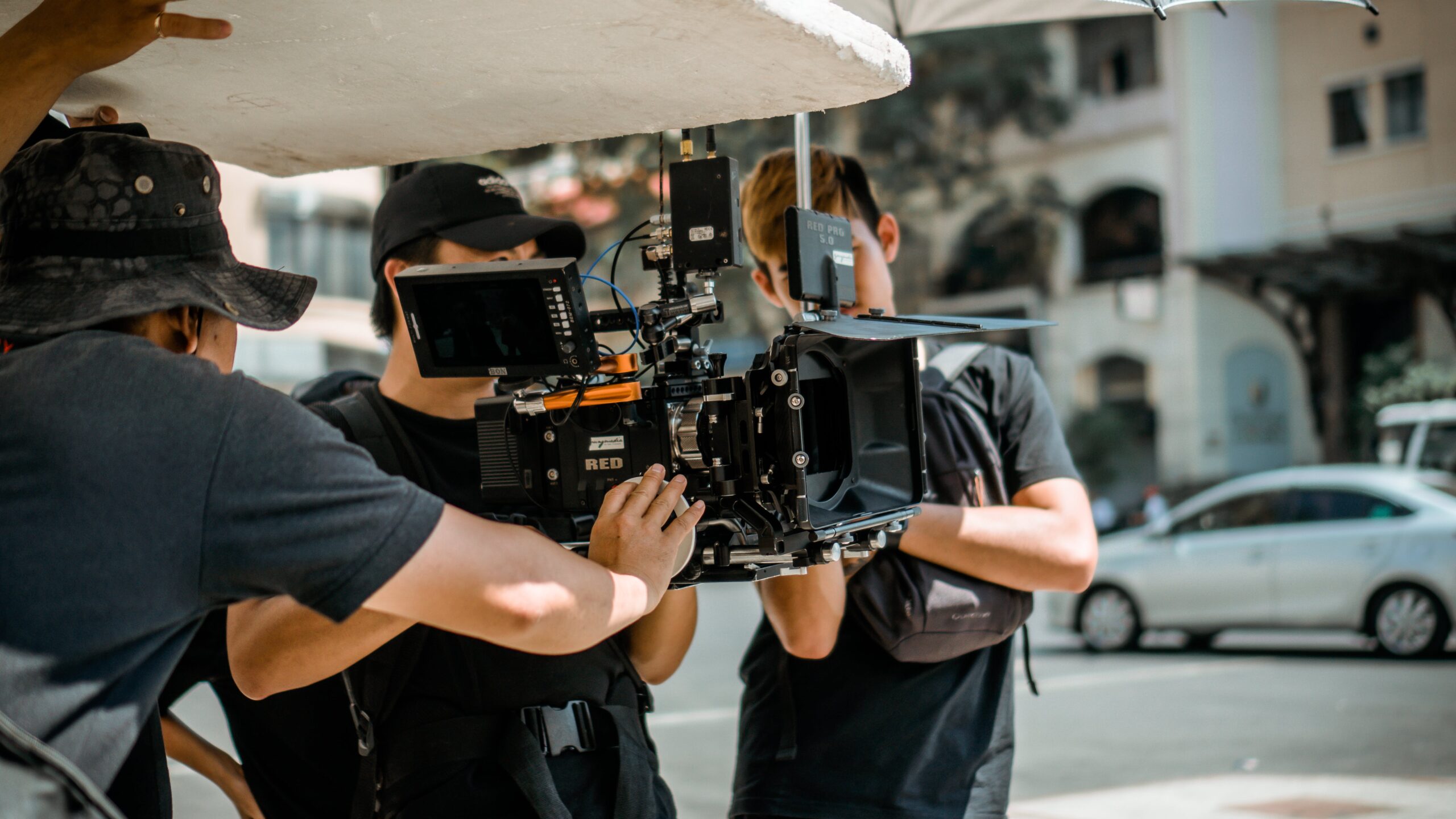
Imagine you're directing a high-octane action sequence when your lead actor suddenly gets injured. Or a location owner's property gets damaged by a stray prop during filming. Or mysterious footage disappears before post-production. Or someone sues claiming their likeness appeared without permission. Or equipment worth hundreds of thousands of dollars gets stolen from your production trucks. Welcome to the reason film productions require insurance that reads like a conspiracy theorist's wildest fever dream: comprehensive policies protecting against scenarios so varied and unpredictable that listing them all would fill an entire contract.
Film insurance isn't merely a formality or an expense producers begrudge. Rather, it represents the critical infrastructure enabling film production to operate with acceptable financial risk. Without proper insurance coverage, a single accident could bankrupt producers, trigger catastrophic lawsuits, and prevent future productions from securing financing. Understanding what film insurance actually covers reveals how the industry manages millions of dollars in assets while navigating inherently chaotic production environments.
The Foundations: Why Film Insurance Isn't Optional
Before examining specific coverage types, understanding why film insurance exists proves essential. Production fundamentally involves risk concentration: hundreds of people working simultaneously in confined spaces, handling expensive equipment, working irregular hours in often-challenging conditions, and frequently operating near third parties with no connection to the production.
Additionally, most film productions operate under contractual requirements mandating insurance before financing can be accessed or locations can be secured. Broadcasters, financiers, and distributors universally require evidence of comprehensive insurance coverage before providing capital or distribution agreements.
According to insurance professionals at Front Row Insurance, productions cannot secure filming permits from municipalities without providing evidence of Commercial General Liability Insurance. Additionally, private location owners virtually always demand proof of insurance before granting filming access. Equipment rental companies require comprehensive property insurance documentation before releasing expensive cameras, lighting gear, and grip equipment.
This contractual requirement structure means insurance isn't truly optional. Productions without coverage cannot access capital, cannot secure locations, and cannot rent equipment. Insurance becomes a cost of doing business, as fundamental as script acquisition or crew hiring.
The Main Coverage Types: Building Comprehensive Protection
Film production insurance doesn't operate as a single monolithic policy. Rather, producers combine multiple specialized policies creating comprehensive protection. Understanding the primary coverage categories reveals what protection each policy layer provides.
General Liability Insurance: The Foundation
General Liability Insurance represents insurance's bedrock, protecting productions against claims for bodily injury, property damage, and personal injury resulting from production activities.
This coverage addresses scenarios where third parties (non-employees) get injured or their property gets damaged due to production activities. If a passerby gets hit by a boom operator on a busy street, General Liability covers medical expenses, legal fees, and settlements. If a grip truck accidentally crashes into a location owner's building, General Liability covers repair costs.
Coverage typically includes bodily injury, property damage, legal defense costs, and medical payments. According to insurance documentation from MFE Insurance, General Liability policies usually offer policy limits of 1 million to 2 million dollars, with specific coverage variations depending on production requirements.
However, critically, General Liability does not cover injuries to employees or crew members. Crew injuries fall under different coverage categories entirely.
Workers' Compensation Insurance: Protecting Crew
Workers' Compensation Insurance protects crew members injured during production, covering medical expenses, rehabilitation costs, and lost wages.
Most states legally require production companies to carry workers' compensation insurance if hiring employees. While technically optional for subcontracted crew in some jurisdictions, production companies typically elect to provide this coverage for all personnel, including independent contractors.
According to labor law in most jurisdictions, workers' compensation provides no-fault coverage, meaning injured workers receive benefits regardless of who caused the injury, provided the injury occurred during work-related activities.
Production companies selecting not to provide workers' compensation coverage face substantial legal liability if crew members get injured. From a practical standpoint, establishing workers' compensation demonstrates responsibility that helps attract experienced professionals and secure filming permits.
Equipment Insurance: Protecting Production Assets
Production Equipment Insurance protects cameras, lighting gear, sound equipment, grip equipment, and other production assets from damage or theft.
This coverage addresses scenarios where equipment gets damaged during shooting, stolen from production trucks, or destroyed in accidents. Equipment Insurance typically covers both owned equipment and rented gear.
According to Wrapbook's analysis, Equipment Insurance costs typically depend on the total equipment value. A production with 500,000 dollars in equipment might pay annual premiums of 3,000 to 5,000 dollars for comprehensive coverage, though individual production policies vary dramatically.
Importantly, Equipment Insurance requires accurate inventory documentation. Productions must provide detailed equipment lists to insurers including model numbers, serial numbers, and replacement values. This documentation proves essential if claims occur, as insurers require substantiation before reimbursing equipment losses.
Cast Insurance: Protecting Against Star Power Absences
Cast Insurance covers financial losses if key talent becomes unable to complete their contracted work due to illness, injury, kidnapping, or death.
This coverage addresses scenarios where lead actors become ill mid-production, requiring expensive schedule delays or requiring replacement casting. The Fast and Furious franchise provides a tragic real-world example: Paul Walker's unexpected death during production required replacement casting and stunt doubles, with cast insurance providing coverage for associated expenses.
According to MFE Insurance, Cast Insurance premiums vary based on talent tier and coverage scope. A production with unknown lead actors might secure comprehensive cast insurance for relatively modest premiums. Conversely, productions with A-list talent command higher premiums reflecting greater financial exposure if key talent becomes unavailable.
Critically, Cast Insurance contains exclusions. According to insurance documentation, typical exclusions include pregnancy and pregnancy-related conditions, childhood illnesses including chickenpox and measles, and injuries suffered while performing stunts without prior insurance company notification.
Additionally, actors are typically not covered for illness unless they undergo medical examination by qualified physicians before insurance inception. According to insurance professionals, this medical examination requirement protects insurers from covering pre-existing conditions or lifestyle-related health problems.
Errors and Omissions Insurance: Protecting Against Content Liability
Errors and Omissions Insurance protects productions against legal claims arising from content-related issues including copyright infringement, plagiarism, defamation, invasion of privacy, and unauthorized use of intellectual property.
This coverage addresses scenarios where productions accidentally include copyrighted music without acquiring licensing rights, where background actors appear without consent, or where productions dramatize real events in ways attracting defamation claims.
According to insurance professionals, E&O Insurance is virtually required for distribution. Distributors and broadcasters universally require proof of E&O coverage before acquiring content, protecting themselves against liability for content-related claims.
Obtaining E&O Insurance requires substantiating that appropriate rights have been cleared. Productions must document that music licensing agreements have been obtained, that recognizable people have signed releases, and that copyrighted materials have been cleared for use.
This clearance requirement often extends production timelines. Identifying all clearable elements requires careful script analysis, tracking down rights holders, negotiating licenses, and documenting clearances. According to entertainment law professionals, this clearance work can extend months or even years before insurance can be finalized.
Negative Film and Videotape Insurance: Protecting Final Products
Negative Film and Videotape Insurance covers loss or damage to raw footage, edited sequences, or final digital files.
This coverage addresses scenarios where servers containing footage get damaged, where physical film stock gets destroyed in accidents, or where files get corrupted during post-production. This insurance essentially protects the actual captured content representing months of creative work and substantial production investment.
According to insurance documentation, this coverage typically applies to raw footage, working prints, cutting copies, and final digital files. Coverage extends through post-production and archival phases, protecting content until final delivery.
Props, Sets, and Wardrobe Insurance: Protecting Art Department Assets
Props, Sets, and Wardrobe Insurance covers custom-built sets, theatrical props, and costumes from theft or damage.
Productions frequently invest substantial resources into art department creations, particularly costume design and set construction. This insurance provides protection if sets accidentally get destroyed, if costumes get damaged during filming, or if props get stolen from storage facilities.
According to insurance professionals, this coverage proves particularly valuable for productions featuring elaborate sets or custom-constructed environments. The replacement cost for uniquely designed sets can exceed original construction costs, making insurance protection economically essential.
Specialized Coverage: Addressing Unique Production Requirements
Beyond standard coverage, productions often require specialized policies addressing specific production requirements and unique risks.
Stunt and Action Insurance
Productions involving stunts, precision driving, or dangerous action sequences require additional specialized coverage. According to insurance documentation, standard policies contain exclusions for cast members injured during hazardous stunts or special effects without prior insurance company notification.
Producers intending stunt filming must provide stunt coordinators' resumes, detailed scene descriptions, protective measures documentation, and comprehensive risk assessments. Insurance companies evaluate this information and either approve coverage, approve with higher deductibles, approve with coverage sub-limits, or decline coverage entirely if risk assessment deems stunts too hazardous.
According to stunt coordinators and safety professionals, early communication with insurance brokers about stunt activities proves absolutely essential. Attempting to hide stunt filming or adding improvised stunt sequences not included in original insurance applications can result in denied claims if accidents occur.
Drone Insurance: Addressing UAV Operations
Modern productions increasingly employ drones for aerial cinematography. Specialized Drone Insurance covers liability from drone operations, physical damage to drones and associated equipment, and injuries resulting from drone activities.
Drone Insurance coverage includes liability for injuries to third parties if drones malfunction or crash into people, coverage for drone replacement if equipment is damaged, and coverage for payload equipment including cameras and stabilization systems.
According to drone safety professionals, drone insurance costs typically increase based on flight hours, crew experience levels, drone equipment value, and production environment complexity. Urban filming with significant third-party proximity commands higher premiums than rural shooting with minimal public interaction.
Underwater and Environmental Filming
Productions filming underwater, in extreme weather conditions, or in otherwise hazardous environments require specialized coverage addressing unique risks.
Underwater filming insurance covers risks from diving accidents, equipment malfunction in water environments, and injuries from pressure-related incidents. Environmental filming insurance covers weather-related risks, natural disaster exposure, and climate-related production disruptions.
These specialized coverages command significant premiums reflecting elevated risk profiles. However, for productions requiring specialized environments to achieve creative visions, these insurance options enable productions that would otherwise be prohibitively risky.
Animal Insurance
Productions featuring animals require specialized coverage addressing injury risks from animal behavior and animal welfare liability.
Animal Insurance covers injuries to cast, crew, or third parties resulting from animal behavior, as well as animal welfare claims. According to insurance professionals, coverage includes liability if animals escape containment, injure people, or suffer negligent treatment.
Insurance companies typically require proof of professional animal handlers' experience before providing coverage. Production companies must demonstrate appropriate facilities, containment protocols, and veterinary oversight to secure reasonable premiums.
Policy Types: Short-Term, Long-Term, and Annual Options
Film production insurance comes in different configurations depending on production requirements and company volume.
Short-Term Project-Specific Insurance
Short-term policies cover individual productions for defined time periods, typically ranging from one day to several months. These policies suit productions creating standalone projects like commercials, music videos, or individual feature films.
Short-term policies often provide coverage flexibility, allowing productions to start and end coverage precisely aligned with production schedules. However, per-day or per-week costs can exceed long-term arrangement costs when amortized across extended production periods.
Long-Term Project-Specific Insurance
Long-term policies cover extended productions including feature films with multi-month shooting schedules or television series spanning multiple seasons. These policies typically span the entire production and post-production period.
Long-term policies provide cost advantages compared to sequential short-term policies. Rather than paying individual daily or weekly rates, producers secure aggregate rates covering extended periods. Additionally, long-term policies simplify administration compared to repeatedly purchasing new coverage.
Annual Policies (DICE)
DICE policies cover multiple productions within one-year periods. DICE stands for Documentaries, Industrials, Commercials, and Educational Films, though DICE policies also cover music videos, short films, and other diverse projects.
DICE policies suit production companies regularly producing multiple projects annually. Rather than purchasing individual project insurance repeatedly, companies secure annual blanket coverage encompassing all projects. These arrangements provide administrative simplicity and often better per-project economics than sequential short-term policies.
The Insurance Application Process: Due Diligence and Underwriting
Securing film production insurance requires substantial information disclosure and documentation. According to insurance professionals, the underwriting process typically begins with detailed application forms requesting production information.
Applications typically request:
Production synopsis and scripts
Shooting schedules and location lists
Cast and crew lists, particularly highlighting key personnel
Equipment inventories and estimated values
Detailed budget breakdowns
Risk assessments addressing unique production requirements (stunts, animals, underwater filming, etc.)
Producer experience documentation and track records
Key crew resumes, particularly for producers, directors, and department heads.
Insurance underwriters review this information, evaluating production risk profiles and determining appropriate coverage, deductibles, and premiums. Underwriters with prior film production experience can assess risk more accurately and negotiate competitive premiums compared to underwriters lacking entertainment industry background.
According to insurance professionals at Front Row Insurance, producers should provide applications to insurance brokers at least three to five days before needing coverage, allowing sufficient time for underwriters to review information thoroughly, negotiate coverage terms, and arrange documentation before production commences.
Certificate of Insurance: The Documentary Proof
Once policies are arranged, insurance companies issue Certificates of Insurance (COIs), documents certifying that specified coverage exists and identifying key policy information.
Certificates typically include:
Policy numbers
Coverage types and limits
Effective dates and expiration dates
Named insured parties
Insurance company contact information
Certificate issuing dates.
Productions must provide Certificates of Insurance to location owners before filming access, to municipalities when requesting permits, to equipment rental companies before accepting rental gear, and to financiers and distributors per contractual requirements.
According to insurance professionals, maintaining updated Certificates of Insurance and proactively distributing them to relevant parties prevents last-minute documentation crises and demonstrates professional production management.
Claims Management: When Things Go Wrong
When production incidents occur and claims become necessary, navigating claims processes proves essential to securing appropriate reimbursement.
According to insurance professionals, successful claims require:
Immediate incident documentation
Photographs and videos of incident locations and damage
Written incident reports from responsible parties
Medical records if human injury occurred
Witness contact information
Police reports if incidents involve criminal activity
Third-party estimates for property repairs or replacement.
Insurance companies assess claims information, determine whether coverage applies, verify that incidents fall within policy definitions, and either approve claims for full reimbursement, approve partial reimbursement, or deny claims if circumstances fall outside coverage scope.
According to insurance professionals, maintaining detailed incident documentation and communicating promptly with insurance brokers after accidents significantly increases likelihood of successful claims processing.
The Quiet Infrastructure: Insurance Enabling Ambitious Filmmaking
Film insurance rarely attracts attention until incidents occur. Yet it represents absolutely critical infrastructure enabling the industry to function. Without comprehensive insurance protecting against equipment loss, third-party injury claims, cast unavailability, and countless other risks, financing film production would be dramatically more constrained.
Insurance costs reduce production budgets, sometimes accounting for 2 to 5% of total production expenses, depending on production scope and risk profile. These substantial costs represent the price of accessing capital, securing locations, and protecting stakeholders' interests.
For producers, insurance represents a necessary expense. For investors and financiers, insurance represents essential risk mitigation protecting their capital. For crew members, insurance represents protection against workplace injuries. For third parties adjacent to productions, insurance represents compensation mechanisms if accidents occur.
The True Value: Risk Management and Peace of Mind
Film insurance fundamentally transforms film production from dangerously speculative ventures into manageable financial activities with defined risk parameters. Rather than assuming catastrophic financial exposure from unpredictable production incidents, producers convert those risks into quantifiable insurance expenses.
This transformation enables more sophisticated financing structures, more aggressive capital deployment, and ultimately, more ambitious artistic visions. Without insurance providing downside protection and risk mitigation, productions would operate with much smaller budgets and far more conservative approaches.
Understanding film insurance's role in production reveals how modern cinema operates as sophisticated business enterprise combining artistic ambition with financial prudence. The insurance policies protecting sets, protecting cast, protecting equipment, and protecting against legal liability represent the mechanisms enabling millions of dollars to flow toward production with acceptable risk profiles.
Where Risk Gets Transferred: Insurance as Production's Invisible Safety Net
Film insurance represents one of cinema's least celebrated yet absolutely critical infrastructure elements. From general liability protecting against third-party injury claims through equipment insurance protecting production assets through cast insurance protecting against leading actor absences through errors and omissions insurance protecting against content liability, insurance provides comprehensive protection addressing production's inherent unpredictability.
In 2025, no significant film production operates without comprehensive insurance coverage. The financial stakes—millions of dollars in equipment, locations, and crew costs combined with potential legal liability from incidents, contractual requirements from financiers and distributors, and practical impossibility of securing locations or equipment without proof of coverage—make insurance economically essential rather than optional.
For producers seeking to understand film's business dimensions, recognizing insurance's centrality proves essential. Comprehensive coverage protects millions on set, enables ambitious productions, manages inherent risks, and provides the peace of mind allowing creative professionals to focus on artistic vision rather than financial catastrophal catastrophe scenarios.


Comments
Post a Comment