Breaking Down the Film Value Chain: From Script to Screen
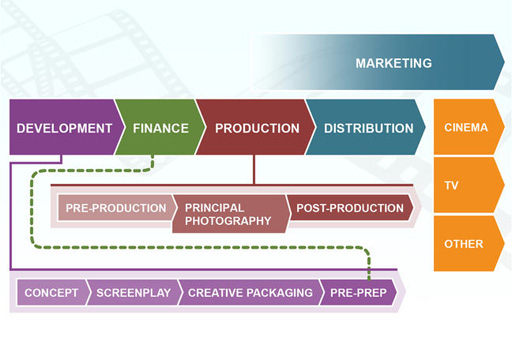
Ever wondered what happens when a screenwriter pitches an idea to a producer? Or why a film production budget can balloon into the hundreds of millions? The journey from script to screen is wonderfully chaotic, remarkably complex, and honestly, packed with more moving parts than most people realize. It's not just about pointing cameras and yelling "action." Behind every frame you see on screen sits an intricate ecosystem of creative professionals, financial negotiations, technological processes, and strategic decision-making that would make even a Swiss watchmaker nod in appreciation.
The film value chain represents the complete lifecycle of a motion picture, from that initial spark of an idea through to audiences watching the final product in theaters or on their sofas. Each stage builds upon the previous one, with decisions made during development rippling through production budgets and ultimately affecting distribution strategies. Understanding this chain isn't just intellectually satisfying (though it is); it reveals why films cost what they cost, why some projects succeed while others stall indefinitely, and how the industry has transformed in the streaming era.
The Development Stage: Where Dreams Meet Spreadsheets
The development phase represents the foundation upon which everything else builds. This stage begins with a simple idea, but transforming that idea into a greenlit project requires far more than creative enthusiasm.
Conceptualization and Rights Acquisition
The journey typically starts when a producer identifies source material. This could be an original screenplay pitched by a writer, an existing property like a novel or comic book that captures the producer's imagination, or even a real-world story worth dramatizing. When adapting existing material, producers don't immediately purchase the work. Instead, they negotiate what's called an "option agreement," a sophisticated legal arrangement that deserves explanation.
An option agreement essentially puts a screenplay or underlying work on hold. The producer pays an initial option fee, ranging from one thousand to five thousand dollars for independent projects or far more for studio films, granting them exclusive rights to develop the material for a specified period, typically six to eighteen months (with twelve months being the industry standard). This arrangement protects both parties. Writers receive compensation for their work while maintaining the possibility of selling elsewhere if the producer abandons the project. Producers gain time to develop the material, attach talent, and seek financing without committing the full purchase price upfront.
According to guidance from the World Intellectual Property Organization, if the producer decides to proceed with the film during the option period, they exercise the option by negotiating a "rights purchase agreement." This outlines the complete terms for acquiring the underlying work, including that the filmmaker receives "all rights in the universe," meaning they control the property across all formats and sequels in perpetuity.
The option fee typically ranges from a token amount for unknown properties to hundreds of thousands for bestselling novels or established screenplays. Critically, the option fee merely grants the right to develop; if the project doesn't proceed, those fees are generally non-refundable. This creates natural financial incentive for producers to move projects forward efficiently.
Screenplay Development and Story Refinement
Once rights are secured (or original screenplays are commissioned), the intensive work of script development begins. Professional screenwriters charge anywhere from fifty thousand to three hundred thousand dollars to write a feature screenplay, depending on their experience and the project's profile.
The screenwriting process rarely follows a straightforward path. Producers typically hire screenwriters to deliver a treatment (a prose summary), followed by multiple drafts and revisions. The first draft establishes the overall story structure and characters. Subsequent drafts refine pacing, dialogue, character arcs, and thematic elements. This iterative process can take months or years. Some scripts receive dozens of revisions from multiple writers before the producer considers them "film-ready."
Development executives and script consultants provide specialized feedback during this phase, a profession that emerged as studios recognized that quality feedback early in development saves astronomical amounts of money later during production.
Securing Financing and Creative Packaging
As screenplays approach completion, producers simultaneously pursue financing. This represents the true trial by fire. Producers must convincingly pitch their project to studios, production companies, investors, and international distributors, articulating why audiences will care about their story and why the investment makes financial sense.
Financing strategies vary dramatically. Major studios typically finance projects from accumulated capital or long-term investment arrangements. Independent producers employ a far more complicated approach, combining traditional equity investment, negative pickup deals (where distributors agree to purchase distribution rights before the film is made), international presales, and increasingly, tax credits and rebates.
During this period, producers also engage in "creative packaging," assembling key above-the-line talent that makes the project attractive to studios and audiences. Attaching name-recognition directors, A-list actors, or celebrated cinematographers significantly increases the likelihood of attracting financing. Steven Spielberg's observation captures this dynamic well: "When I was a kid, there was no collaboration; it's you with a camera bossing your friends around. But as an adult, filmmaking is all about appreciating the talents of the people you surround yourself with and knowing you could never have made any of these films by yourself."
Development often represents the most challenging phase. According to data from independent film finance analysis, most films never progress beyond development and pre-production stages. Projects stall when financing proves elusive, creative visions conflict with market realities, or producers simply lose confidence in the material. This is why development typically stretches across two to five years, particularly for complex productions.
Pre-Production: The Meticulous Planning Architecture
Once financing is secured and the script is locked, production officially moves into pre-production. This phase, often underappreciated by audiences, represents a crucial organizational period where producers and directors transform the screenplay into a detailed production roadmap.
Building the Creative Team
The first major task involves assembling the creative leadership. The director, already potentially attached during financing, works collaboratively with the line producer and unit production manager to establish the film's operational infrastructure. These roles prove critical. The line producer manages daily operational logistics, budget tracking, crew hiring, location contracts, and union compliance. As experts explain, the line producer essentially serves as the bridge between creative decision-makers and the practical realities of filming.
Simultaneously, the producer hires essential creative department heads. The director of photography (DP), also known as the cinematographer, becomes the director's closest creative collaborator on set. This professional handles all decisions regarding camera angles, lighting design, color palette, and visual language. The DP essentially translates the director's artistic vision into visual language that shapes how audiences perceive the film.
The production designer oversees the film's entire visual design architecture, working with the art department to conceptualize sets, select locations, and coordinate the overall "look" of the film's world. The costume designer shapes character identities through wardrobe choices, while the makeup department head manages hair and makeup logistics. Each of these professionals commands substantial creative authority within their domain.
Location Scouting and Logistics
The location manager embarks on the painstaking work of identifying, negotiating, and securing filming locations. A feature film typically shoots across ten to thirty different locations, each requiring permits, location agreements, insurance documentation, and community coordination.
This process involves far more complexity than simply finding photogenic places. Location scouts evaluate practical considerations including road access for equipment trucks, nearby parking for crew vehicles, electrical power availability, local regulations, permitting costs, and potential disruptions from shooting. A single location might cost anywhere from nothing (private residences with owner permission) to ten thousand dollars or more per day for premium urban locations.
Concurrently, the production designer and director finalize the overall look by creating lookbooks (visual reference collections), architectural renderings for set construction, and design documentation that communicates the production's visual aesthetic to all departments.
Budgeting and Scheduling
The line producer and UPM (unit production manager) create detailed production budgets and shooting schedules that establish the financial and temporal parameters for everything that follows. Budget breakdown typically follows this approximate allocation: above-the-line costs (producers, director, writers, actors) representing 30-35% of the budget; production costs (crew, equipment, locations) consuming 25-30%; post-production expenses (editing, sound, VFX, color grading) accounting for 20-25%; and contingency reserves capturing 10-15%.
For context, major studio productions now require approximately sixty-five million dollars just for production, with an additional thirty-five million allocated for marketing and distribution. Visual effects represent a particularly substantial expense. Studios typically spend two thousand to five thousand dollars per minute for high-quality 3D CGI, with complex sequences reaching forty-six thousand dollars per VFX shot.
The shooting schedule represents an equally critical planning document. Producers aim to concentrate shooting in the most efficient order possible, which rarely matches screenplay sequence. Instead, producers group scenes by location to minimize moving the entire production unit, schedule certain actors' scenes together to minimize their contract length, and front-load visual effects-heavy sequences to provide adequate post-production time.
A typical feature film shoots for forty to sixty days, though budgets and project complexity significantly affect actual timelines. Independent films might compress shooting into thirty days using lower budgets, while epic productions can extend to one hundred-twenty days or more.
Casting and Crew Assembly
The casting director orchestrates the process of identifying, auditioning, and negotiating contracts with actors. This involves reading thousands of submissions, conducting callbacks, negotiating with talent agents, and managing the complex union requirements that govern actor employment in professional productions. Major roles in contemporary studios often involve international superstars whose availability, fees, and scheduling requirements shape the entire production timeline and budget.
Meanwhile, other department heads hire their specialized crews. The gaffer (chief lighting electrician) assembles the electrical department, the key grip oversees the grip department responsible for camera support and rigging, the production sound mixer builds the audio department, and so forth. Union requirements, professional experience levels, and department budgets all influence hiring decisions.
The Production Phase: Lights, Camera, Controlled Chaos
When all pre-production planning concludes, cameras roll for what's called principal photography. This phase typically lasts six to twelve weeks for narrative features, though documentaries, commercials, and television productions follow different timelines.
Principal Photography Operations
The director, collaborating intimately with the DP, orchestrates the visual creation of each scene. The camera operator physically operates the camera under DP direction. The first assistant camera maintains precise focus throughout each take, a technically demanding role requiring extraordinary skill and concentration.
The set operates with remarkable coordination despite apparent chaos. The assistant director manages the practical flow of the set, communicating between departments, maintaining the shooting schedule, and ensuring smooth transitions between setups. The script supervisor meticulously documents every take, tracking continuity details that maintain visual consistency across different shooting days and locations. Wardrobe, makeup, and hair departments ensure actor appearance matches previous takes within scenes. The production designer's art department stands by to adjust set elements, clear unwanted background items, or modify decorations between camera positions.
Behind the scenes, the line producer continuously monitors budget and schedule adherence. Any deviation from the approved budget or shooting schedule triggers immediate attention. Productions can hemorrhage thousands of dollars per day when inefficiencies accumulate, making the line producer's role absolutely critical.
Supporting Departments and Logistics
The location services department manages daily relationships with location owners, handles parking, permits, noise concerns, and community coordination. Catering services feed potentially hundreds of crew members each day. The production office coordinates payroll, manages insurance, handles union paperwork, and processes dozens of daily logistical challenges.
Camera equipment alone represents an enormous logistical undertaking. Modern digital cinematography utilizes expensive camera bodies, lenses, support equipment, and specialized gear. A complete camera package might cost ten thousand to one hundred thousand dollars in rental fees alone for a production shooting across multiple months.
Throughout principal photography, the VFX supervisor maintains careful documentation of visual effects sequences. They photograph reference materials, document lighting conditions for later digital matching, and coordinate between the camera crew and post-production visual effects teams to ensure seamless integration of visual effects into live-action footage.
Post-Production: Where Raw Footage Becomes Cinema
Once principal photography wraps, the film enters post-production, a phase equally complex as production itself. Post-production typically consumes three to six months, though complex visual effects-heavy productions can extend far longer.
Editorial Process and First Assembly
The editor receives all raw footage, now called dailies or rushes. The editor's primary task involves transforming hundreds of hours of footage into a coherent narrative. The process typically begins with creating a rough cut, assembling scenes in story sequence and identifying which takes and angles work best narratively.
The director reviews the rough cut, providing feedback and directing editorial changes. This iterative process continues through multiple passes, refining pacing, adjusting continuity, and eliminating redundant moments. This phase culminates in a picture lock, where the director and editor approve the final cut and freeze all changes. Any structural modifications after picture lock typically occur only for emergency circumstances.
Visual Effects and Compositing
Visual effects professionals undertake their most intensive work after picture lock. The VFX pipeline operates with remarkable specialization. Different artists handle tracking (determining camera movement and object position within 3D space), rotoscoping (manually frame-by-frame animation of objects), 3D modeling (digital asset creation), texturing and shading (surface detail and appearance), lighting (virtual light placement), and rendering (final image generation from 3D models).
Complex visual effects sequences might involve dozens of artists working simultaneously on different aspects of a single shot. As VFX artist Ira Morris explains, the pipeline resembles an automotive manufacturing facility where different specialists create specialized components that ultimately integrate into a complete finished product.
The render farm, an array of powerful computers running specialized software, processes the final computations that transform 3D models and animation into two-dimensional images. Rendering can consume enormous computational resources. A single frame of complex visual effects might require hours or even days of render time, making rendering costs a significant portion of visual effects budgets.
Color Grading and Correction
The colorist works with raw footage (or edited footage in many contemporary workflows) to adjust colors for consistency and apply the film's signature visual aesthetic. Color correction addresses technical issues like inconsistent lighting from different shooting days or different takes of the same scene. Color grading applies the director's artistic vision, establishing mood and tone through sophisticated color work.
Color grading profoundly influences audience emotional response. Warm color palettes evoke nostalgia or intimacy. Cool color palettes suggest isolation or danger. High-contrast grades create visual intensity. Desaturated color palettes evoke emotional heaviness or period pieces. A skilled colorist shapes how audiences psychologically experience the narrative through sophisticated manipulation of color, light, and shadow.
Sound Design and Mixing
The sound department undertakes equally intricate work. Sound designers create foley (recreated everyday sounds synchronized to on-screen action), source music (music diegetically present in the scene, like a radio playing), and sound effects. Dialogue editors clean up production dialogue from set recording, potentially adding ADR (automated dialogue replacement) where actors re-record dialogue in controlled studio conditions to achieve superior audio quality or different performances.
The sound mixer orchestrates thousands of individual audio elements, balancing dialogue clarity against music intensity, ensuring sound effects support rather than overwhelm critical moments, and creating three-dimensional sonic environments that immerse audiences in the film's world. Final sound mixing can consume weeks as the mixer carefully crafts the audio experience.
Music Composition and Integration
The composer, ideally involved during pre-production planning, creates original music that underscores emotional beats and enhances storytelling. Original film composition represents a specialized craft requiring simultaneous expertise in musical composition, emotional storytelling, orchestration, and technology. The composer integrates original music with source music and sound effects, crafting a complete sonic landscape.
Distribution Strategy and Market Positioning
Upon completing post-production, studios confront crucial distribution decisions that fundamentally affect financial returns. The film's theatrical window strategy represents perhaps the most consequential choice.
Release Window Strategies
Traditional windowing strategies sequence the film across different platforms over time. The theatrical window typically lasts four to eight weeks, after which films transition to premium VOD (video-on-demand) platforms like iTunes and Google Play, where early adopters rent or purchase the film at premium pricing of fourteen to twenty-five dollars.
After premium VOD windows close (typically two to four weeks), films transition to subscription video on demand (SVOD) services like Netflix, Disney+, or Hulu under licensing agreements negotiated before production commenced. Simultaneously, films remain available for digital purchase through various platforms, creating multiple simultaneous revenue streams.
However, contemporary distribution increasingly employs hybrid strategies. Day-and-date releases simultaneously premiere films in theaters and on streaming platforms, acknowledging how modern audiences consume content across multiple platforms. Limited theatrical releases in select cities establish cultural credibility while immediately moving to streaming for broader availability. Some productions skip theatrical entirely, moving directly to streaming platforms.
The optimal strategy depends on project genre, target audience, production budget, and current market conditions. Studios now employ sophisticated data analytics to determine which distribution approach maximizes revenue across all channels rather than assuming traditional theatrical-first strategies automatically generate superior returns.
International Distribution Architecture
International sales agents operating on commission (typically 10-25% of licensing fees) negotiate territorial licensing arrangements in individual countries or regional groupings. A single film might generate distinct revenue streams from theatrical releases in China, the United Kingdom, Australia, Japan, India, and dozens of other territories, each negotiated independently with local distributors.
Release timing varies dramatically across territories. A film might open in North America during peak summer season, then sequence releases across European territories with staggered timing, followed by Asian releases during optimal local seasons. This global orchestration extends the film's theatrical revenue potential across months or even years.
The Value Chain in Contemporary Context
The traditional film value chain I've described represents an idealized progression. In reality, boundaries blur considerably. Pre-production activities overlap with financing arrangements. Post-production planning influences production decisions. Distribution strategies established during development affect how films are shot and edited.
Moreover, technological advancement continues reshaping traditional value chains. Virtual production technologies allow directors to visualize digital environments during pre-production rather than waiting for post-production visual effects. Digital acquisition cameras reduce equipment costs while improving image quality. Cloud-based collaboration enables editors, composers, and sound designers to work simultaneously despite geographic distance, accelerating post-production timelines.
The emergence of streaming platforms has fundamentally disrupted conventional wisdom about value chain sequencing. Whereas films previously required theatrical success to justify investment, contemporary business models acknowledge that streaming licensing, merchandise opportunities, and ancillary revenue streams sometimes exceed theatrical revenue. This recognition has prompted strategic reconsideration of window timing, release strategy, and platform prioritization.
From Ink on Paper to Global Box Office: The Remarkable Journey of Film Value Creation
The transformation from script to screen represents one of popular culture's most complex creative and commercial undertakings. Hundreds of specialized professionals contribute their expertise within carefully coordinated departments. Millions or hundreds of millions of dollars flow through elaborate financing arrangements. Sophisticated technologies facilitate creative collaboration across global teams. Strategic decisions during development ripple through production budgets and ultimately affect which audiences witness your film and through which platforms they experience your story.
Understanding the film value chain provides profound appreciation for the seemingly simple experience of watching a movie. Every frame represents countless decisions made across development, production, and post-production phases. Every emotional moment benefited from meticulous planning during pre-production. Every technical achievement emerged from teams of specialized professionals applying their crafts within the value chain structure.
For aspiring filmmakers, producers, and investors, understanding this architecture proves essential. The contemporary value chain increasingly demands portfolio approaches combining multiple revenue streams rather than relying on theatrical performance alone. The most successful filmmakers recognize how decisions made during development affect production efficiency, which ultimately influences post-production timelines, distribution flexibility, and financial returns across all platforms. In 2025, filmmaking success requires orchestrating excellence across every link in the value chain while remaining agile enough to adapt to evolving platforms, audience preferences, and market dynamics that continuously reshape how stories reach audiences worldwide.


Comments
Post a Comment