The Science Behind Attraction: What Makes Someone Swipe Right
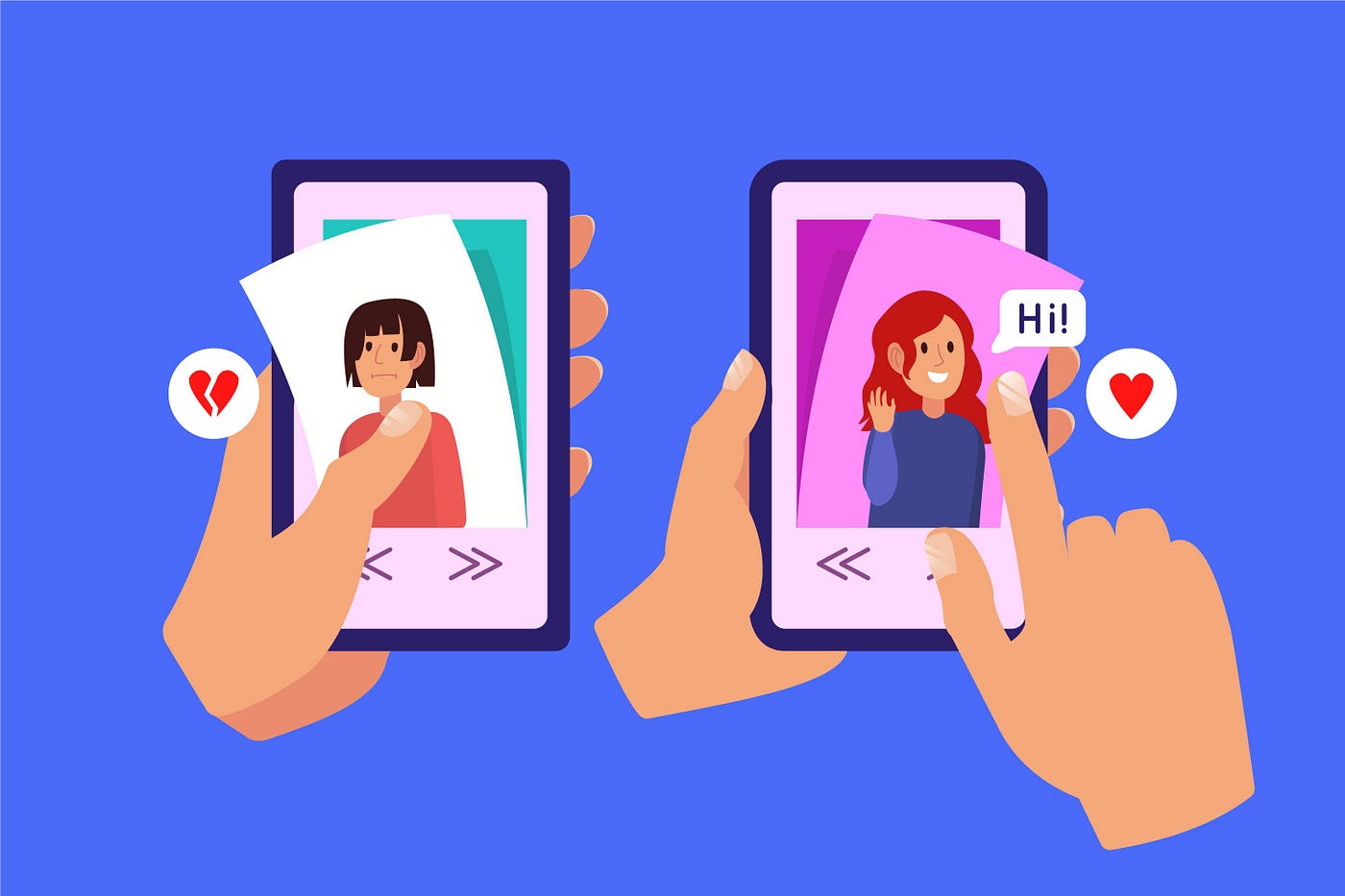
Welcome to the world's strangest job interview, where you have less than one-tenth of a second to make a hiring decision and the stakes are potentially spending the rest of your life with someone. That's modern dating in a nutshell: ultra-fast judgments based on limited information, governed by biological impulses we barely understand and psychological patterns we've inherited from ancestors who had very different relationship goals (like survival, for instance). But what actually makes us swipe right on one profile and mercilessly left on another? Buckle up, because the science behind attraction is far more fascinating than any pickup line you've ever heard.
Your Brain on Autopilot: The Lightning-Fast Decision Making
Here's a humbling truth: it takes less than one-tenth of a second to form a first impression of someone's face. That's 100 milliseconds. Faster than you can say "swipe right." According to research from Princeton University, these split-second judgments hinge on perceived traits like trustworthiness, competence, and approachability, factors that play a major role in whether someone chooses to engage with you online.
But wait, it gets even faster in the dating app universe. According to Chat-Yamo's analysis of online dating psychology, users spend mere milliseconds assessing profiles before their brains whisper "interesting" or "no thanks". Your conscious mind hasn't even fully processed what you're seeing, but your brain has already made the call. This isn't laziness; it's evolutionary efficiency. Our ancestors needed to make ultra-fast decisions about friend or foe, danger or opportunity, and those same mental shortcuts (called heuristics by psychologists) now govern our swiping behavior.
Dr. Laura Germine, a researcher in psychiatric genetics, explains that despite certain universal traits being considered attractive (like facial symmetry and healthy-looking features), there's massive disparity between who you find attractive versus who someone else finds attractive. Translation: attraction is deeply personal, which is both liberating and confusing.
The Halo Effect: When One Good Thing Colors Everything
Ever noticed how an attractive profile photo makes you assume the person is also intelligent, funny, and probably great at parallel parking? That's the halo effect in action, a cognitive bias where one positive trait influences our perception of unrelated traits. If someone's photo appeals to you, your brain unconsciously assumes they're also trustworthy, interesting, and compatible, even if nothing in their profile confirms these qualities.
This effect is amplified in online dating because we have so little information to work with. In real life, we process someone's entire presence: their voice, movements, expressions, energy, and countless subtle cues. Online, especially in that crucial first photo, those nuances vanish. According to LinkedIn analysis by relationship experts, this narrowing of available information amplifies the impact of first impressions, making superficial features carry more weight online than they would in person.
Physical Attraction: The Evolutionary Heavyweight
Let's address the elephant in the room: yes, physical appearance matters. A lot. According to research from the University of Akron examining Tinder use in college students, physical attractiveness was found to be a substantial factor in swiping decisions, with profiles perceived as attractive garnering significantly more likes.
But what makes someone physically attractive isn't as straightforward as you might think. Evolutionary biology suggests we're drawn to facial symmetry because it signals good health and genetic stability. Features like clear skin and bright eyes subconsciously communicate vitality, indicating a potentially strong and healthy partner.
Here's where it gets interesting: VibeMeter's analysis of 5,000 dating profile photos found that while symmetrical faces received about 23% more positive votes on average, the most memorable faces often had distinctive asymmetrical features. Perfect symmetry can sometimes read as boring. A slightly asymmetrical smile, a distinctive eye shape, or an unusual facial feature made photos more memorable and generated more engagement. The takeaway? Slight imperfections might actually help you stand out in the crowded dating app environment.
The Smile Advantage: Why Grinning Beats Grimacing
If you're doing the sexy smolder thing in your profile photos, you might want to reconsider. Dr. Jess Carbino, the in-house sociologist at Bumble (who previously worked at Tinder), found that smiling makes "such a significant difference" in whether someone gets swiped right on.
According to Carbino's research, too many people fall into the pose-like-a-model trap, posting photos where they're not smiling or emoting at all. "We've been so socialized to believe that this sexy, smoldering look is theoretically appealing because we've watched people in movies and in Calvin Klein ads," Carbino explained. "But the vast majority of people don't look like people in Calvin Klein ads". What's more, not smiling "doesn't give off the type of sentiment that you want to be projected toward a potential match." You want to come off as kind and approachable, which is what smiling projects, in contrast to seeming cold and distant.
Research from Switzerland published in the journal Cognition and Emotion backs this up. In two experiments examining the relationship between attractiveness and smiling, researchers found that the stronger the smile, the more attractive a face looked. A separate study on dating profiles confirmed that smiling enhances someone's attractiveness and boosts their profile success.
Humor: The Secret Weapon of Attraction
Physical looks might get your foot in the door, but humor keeps people interested. According to University of Kansas research by Jeffrey Hall, when two strangers meet, the more times a man tries to be funny and the more a woman laughs at those attempts, the more likely it is for the woman to be interested in dating. But an even better indicator of romantic connection? If the two are spotted laughing together.
Here's the fascinating part: Arizona State University researchers Erika Langley and Michelle Shiota found that people attribute many other positive qualities to someone who can make them laugh. Their research, drawn from six studies with over 1,600 participants ages 18 to 69, revealed that humor acts as a cue leading people to perceive a potential partner as possessing other desirable traits.
"Across experiments, humor was linked to the belief that a potential dating partner is a creative thinker," Shiota explained. "Rather than creative in an artistic sense, we found that humor was linked to inferring a potential partner possessed creative ingenuity: thinks in clever ways, is a problem-solver". This finding held in hypothetical dating scenarios, simulated dating profiles, and video dating profiles.
What's surprising? Both men and women inferred creative ingenuity in funny partners, contradicting the stereotype that humor is primarily a male trait used to attract women.
Beyond Looks: What Actually Makes People Swipe Right
According to the University of Akron study, while physical attractiveness is overwhelmingly important, the majority of participants said they take profile biographies into equal or higher account than photographs when making swiping decisions. The main ideas that emerged from participant answers regarding their pre-interaction preferences were swiping right on user profiles that exhibited commonalities, humor, perceived compatible personalities, and agreeable behaviors.
On the other hand, participants swiped left on profiles with a lack of humor, presence of risky behavior or incompatible lifestyles, offensive or derogatory language, and boring content. From these preferences, it's clear that users want to meet and connect with people they feel compatible with on a level beyond just physical or sexual attraction.
Real User Testimonials: What Actually Makes Them Swipe
Reddit user TraceNoPlace shared a heartwarming story about what made her swipe right on her now-boyfriend, who didn't fit her typical type: "I matched with him primarily because of a quirky photo he had with his Miata, which had decals that made it look like it was smiling. It was such an odd sight! Even though I'm not particularly into cars, I felt compelled to learn more about him, so I decided to swipe right". Their first date turned out to be the best she'd ever had, and they discovered they both shared experiences with anxiety. She added, "Initially, I felt some doubts because I had always envisioned my ideal partner as someone who exudes confidence. However, it was incredibly refreshing to feel truly understood".
Another Reddit user from r/datingoverforty explained their criteria: "I swiped if they had enough photos to get a good sense of what they looked like, without a hat and sunglasses, and a succinct bio with enough interests and activities that I thought were a good overlap or something I would be interested in trying. Generally positive and optimistic writing, photos with a smile and full body photo that looked relatively recent".
A 42-year-old woman shared: "I like when I see someone's personality in a photo a bit (something they nerd out on), if they have a funny travel photo, or an out of the box outfit. They are good things to start a chat about and shows that they don't take themselves too seriously/can laugh at themselves a bit. I also read the bios. If you have nothing written, I usually pass".
One particularly honest Tinder user summed it up perfectly: "He's cute, employed, and shares some common interests. This is it. Obviously there needs to be attraction, but attraction is based on the whole, not just someone's face, and it includes personality and how they present themselves on the whole. As long as they seem like someone I could date, I'll swipe right. There's no magic formula".
The Moral Character Factor: More Than Meets the Eye
Here's a twist: research published in PMC examining face perception in the age of Tinder suggests that judgments of physical attractiveness aren't the only thing driving swiping decisions. There's an additional evaluative dimension: judgments of moral character.
According to researchers Antonio Olivera-La Rosa and colleagues, who critically reviewed findings about first impressions extracted from faces, moral character in person perception, and creepiness, Tinder users not only make judgments based on physical attractiveness but also based on perceptions of moral character. First impressions extracted from faces are strongly linked not only with simple judgments of attractiveness but also with judgments of moral character and social desirability, especially in the case of unfamiliar targets (which is typically the case with Tinder users).
The Algorithms Working Behind the Scenes
While you're busy swiping, dating app algorithms are busy learning about you. According to research from USC's Illumin publication, every swipe, like, and pause is captured by dating algorithms. If you linger on profiles with particular characteristics, the algorithm notices and adjusts your recommendations accordingly.
Here's something many users don't realize: Tinder and similar apps actually limit right swipes to 100 per day to ensure you're genuinely looking at profiles and not just spamming everyone to rack up random matches. The algorithm rewards pickiness and disincentivizes people from swiping right too much. If you get too swipe-happy, you may notice your number of matches goes down, as the app serves your profile to fewer other users.
Dating algorithms also track phone number exchanges and planned meetups to identify users who genuinely want connections to materialize. The system is designed to prioritize meaningful matches over superficial ones.
The Gender Differences in Swiping Behavior
Research reveals interesting gender patterns in swiping behavior. According to multiple studies, some Tinder users adopt what's called the "shotgun approach," swiping right on every profile to maximize chances of matches, then sifting through matches later to decide whom to message. Others practice "selective swiping," having particular criteria or standards and quickly dismissing profiles that don't meet them.
For women, research shows that close-up photos emphasizing the face often perform better. Men, on the other hand, tend to get more traction with full-body shots. This difference likely reflects evolutionary preferences, with women prioritizing facial features (which signal personality and trustworthiness) and men prioritizing body shape (which historically signaled health and fertility).
Proximity and Similarity: The Comfort Factors
Attraction theory identifies several factors that influence attractiveness: similarity, proximity, reinforcement, physical attractiveness and personality, socioeconomic and educational status, and reciprocity of liking. Tinder's interface presents users with several of these factors: proximity (users can see how far away potential matches are), physical attractiveness and personality (photos and short biographies), and reciprocity of liking (users are matched when both parties swipe right).
According to LinkedIn's science of attraction analysis, research shows that similarity (whether in interests, values, or lifestyle) often fosters attraction. This principle, known as the "similarity effect," explains why we're naturally drawn to people who reflect our own personalities. When we see similarities in profiles, it creates a feeling of familiarity, helping us feel an instant sense of comfort and connection.
The Psychology Behind the Swipe: What It All Means
Dr. Chris Olivola, associate professor at Carnegie Mellon University, points out that we spend about one-tenth of a second actually looking at someone's profile, making the choice to swipe left or right literally a split-second decision. In this ultra-compressed timeline, our brains rely on evolutionary shortcuts, cultural conditioning, and personal preferences all firing simultaneously.
The complexity of attraction means there's no single formula for the perfect profile. What works depends on who's looking, what they're seeking, and how your particular combination of features, expressions, and personality cues resonates with their unique psychological makeup.
Optimizing Your Profile: Science-Backed Strategies
Based on all this research, here are practical takeaways for creating a profile that attracts the right matches:
Smile genuinely. Research consistently shows smiling boosts attractiveness and approachability.
Show personality. Include photos that reveal your interests, hobbies, or sense of humor. Users consistently report these elements make profiles memorable.
Write a thoughtful bio. Most users read bios and appreciate effort. Use humor where appropriate, showcase your personality, and be specific about your interests.
Use high-quality, recent photos. Avoid heavy filters or overly edited images. Authenticity matters.
Include variety. Full body shots, face shots, activity photos, and social settings give a well-rounded picture of who you are.
Be authentic. A genuine expression in a slightly asymmetrical face is far more attractive than a stiff, symmetrical robot face.
Attraction Is Science Meeting Serendipity
The science behind what makes someone swipe right is a fascinating blend of evolutionary biology (we're wired to assess health and genetic fitness quickly), psychology (humor signals creativity and problem-solving), and technology (algorithms learning our preferences and serving matches accordingly). But here's the beautiful part: despite all the science, attraction remains deeply personal and unpredictable. Someone might swipe right because of your smile, your quirky Miata photo, or the way you described your love of obscure podcasts.
Understanding the science doesn't mean gaming the system; it means presenting your authentic self in ways that allow others to see what makes you genuinely interesting. Because at the end of the day, the best matches aren't the ones driven by perfect facial symmetry or algorithmic optimization. They're the ones where two people, each with their unique combination of looks, personality, and quirks, recognize something special in each other.
And that recognition? That's the real magic, whether it happens at first swipe or after weeks of conversation. The science just gets you in the door. What happens next is all human.


Comments
Post a Comment